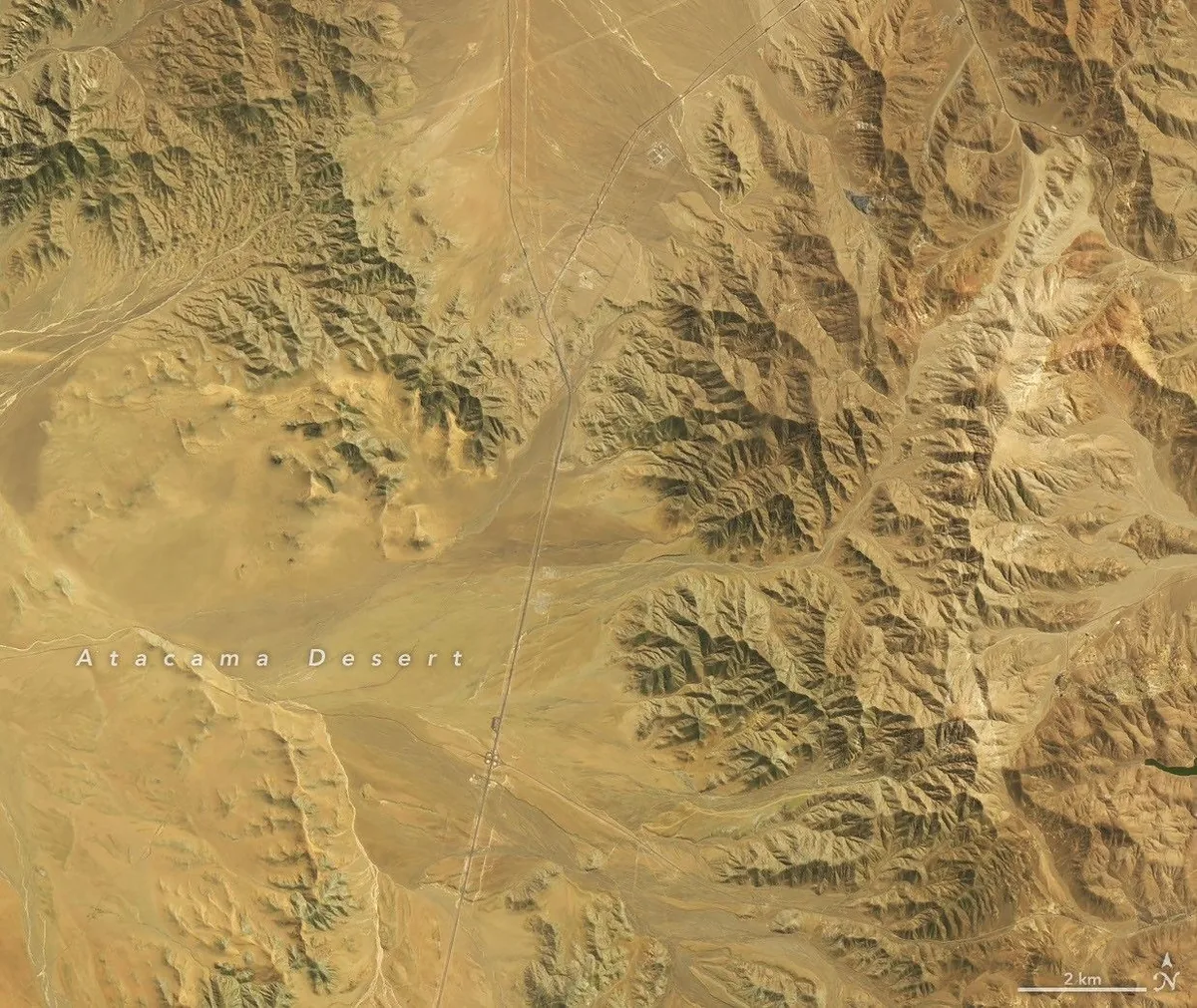
An Unexpected Desert Metamorphosis
The Atacama Desert in northern Chile, recognized as one of the driest places on Earth, has experienced a remarkable natural transformation. Winter precipitation fueled by El Niño conditions swept across the hyper-arid landscape, radically altering the terrain. The sudden influx of moisture awakened countless seeds that had remained dormant beneath the arid soil, initiating a sudden and widespread surge of desert vegetation.
This biological awakening showcases the extraordinary resilience of organisms specialized in surviving extreme environments. Seed banks buried under the soil for extended dry spells react swiftly when winter rains arrive, launching a vibrant burst of life that blankets the barren expanse.
A Record Bloom of the Satellite Era
Spaceborne Earth observation instruments documented this vast ecological event from orbit. Satellite data indicate that the lush carpet spreading across northern Chile may represent the most extensive desert flowering event recorded in the region throughout the entire satellite era.
Orbital imagery reveals how formerly desolate expanses of sand and rock transformed into continuous swathes of blooming vegetation. The scale of this event underscores the utility of satellite platforms in documenting large-scale, ephemeral ecological dynamics triggered by irregular precipitation patterns.
Climate Patterns and Ecosystem Resilience
The phenomenon emphasizes the profound connection between oceanic and atmospheric patterns and terrestrial ecosystems. Moisture anomalies brought on by El Niño can rapidly alter local microclimates, turning inhospitable desert regions into temporary flourishing habitats.
Continuous satellite monitoring allows researchers to examine how extreme habitats respond to shifting weather systems over time. As space agencies continue to observe the planet from orbit, events like this Atacama bloom provide valuable insight into biological adaptation and the resilience of life in Earth's harshest environments.


Comments
Loading comments...