Rethinking Outer Solar System Classification
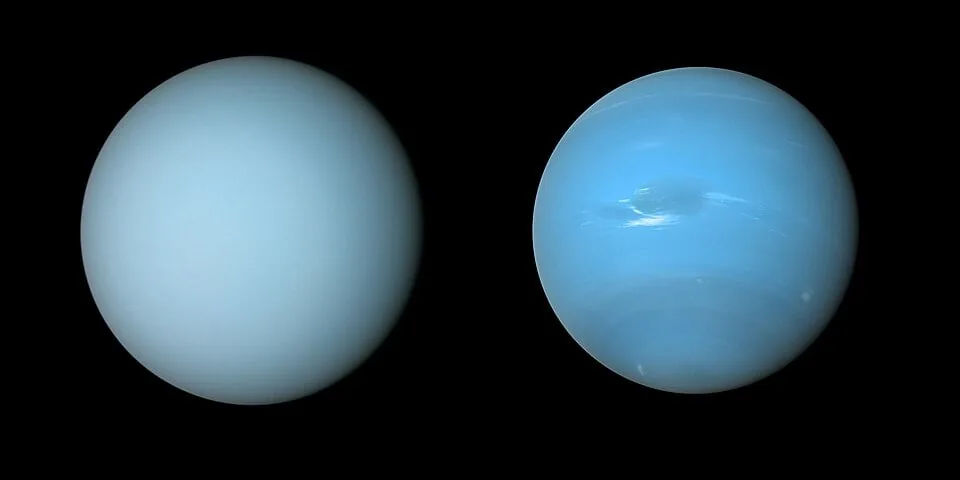
For decades, astronomers have divided the outer planets into two distinct categories: Jupiter and Saturn as 'gas giants' dominated by hydrogen and helium, and the smaller Uranus and Neptune as 'ice giants' rich in heavier elements. However, a new study challenges this long-standing paradigm.
A paper led by Olivier Mousis of the Southwest Research Institute, published in The Planetary Science Journal, explores whether Uranus and Neptune might actually conceal massive rocky interiors beneath their thick gaseous envelopes.
Argon-40 Isotopes as an Internal Probe
The researchers demonstrate that an isotope of a noble gas—argon-40—could hold the key to revealing hidden mountains of rock under the planets' atmospheres. Generated by the radioactive decay of potassium-40, argon-40 acts as a chemical tracer for the amount of rocky material inside a planet.
Measuring the abundance of argon-40 in the atmospheres of these distant worlds provides a direct method to constrain the mass of their underlying rocky cores despite thick overlying layers.
Scientific Implications and Future Missions
If Uranus and Neptune are indeed confirmed to possess dominant rocky interiors, astronomer classifications may shift from 'ice giants' to 'rock giants.' Such a shift would significantly alter existing planetary formation models and our understanding of early solar system chemistry.
Atmospheric probes deployed by future missions to Uranus and Neptune targeting noble gas isotope ratios will be crucial to resolving this fundamental mystery of planetary science.
Comments
Loading comments...