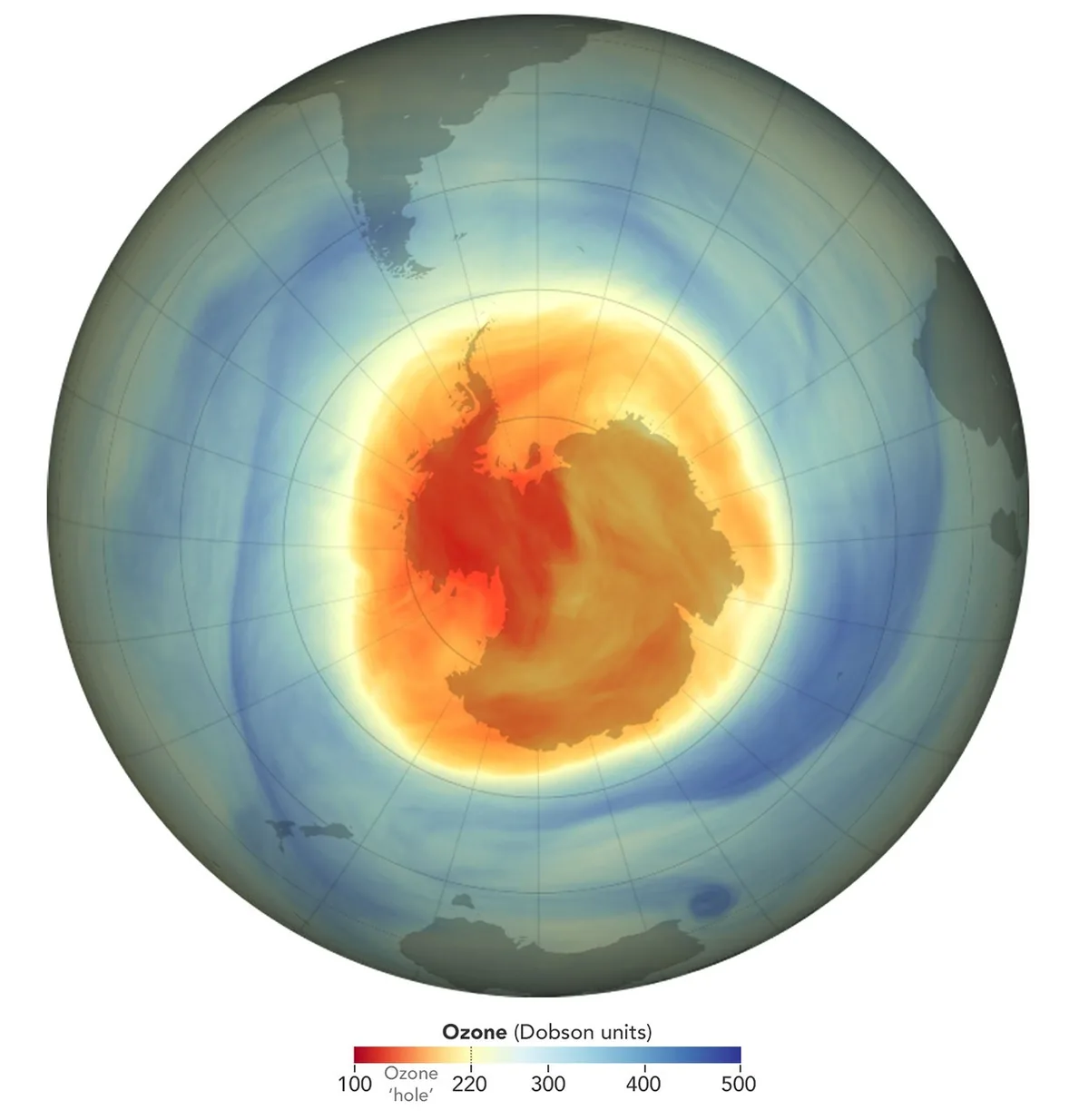
2026 Ozone Hole Observations and Background
NASA and the National Oceanic and Atmospheric Administration (NOAA) continue to monitor Earth's protective ozone layer. According to their latest findings, despite atmospheric conditions that contributed to a larger Antarctic ozone hole in 2026, the layer remains on track for long-term recovery. Research teams noted that seasonal atmospheric factors played a significant role in this year's expansion.
Measurement Data and Depth Analysis
During the peak ozone depletion period from Sept. 7 to Oct. 13, the average extent of the hole covered approximately 25 million square kilometers (9.6 million square miles). This extent ranks as the seventh largest by area in 48 years of continuous monitoring. However, despite its large area, the 2026 hole was not as deep as other record-breaking large holes observed in previous decades.
Significance of Stratospheric Ozone
Stratospheric ozone acts as Earth's natural sunscreen, shielding surface life from harmful solar ultraviolet radiation. Scientists continuously monitor stratospheric ozone to distinguish it from ground-level ozone, which is an air pollutant resulting from human activities. The latest tracking data confirm that the overall long-term trend toward ozone recovery remains intact.

Comments
Loading comments...