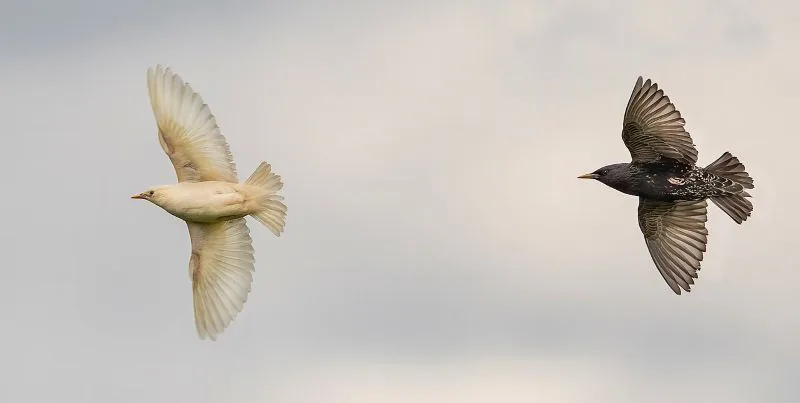
Biological Basis of a Ghostly Appearance
Strikingly pure-white animals in the wild have inspired folklore and legends of spectral apparitions across various cultures. Yet evolutionary biology reveals that these pale, ghostlike phenotypes are the product of specific genetic mutations governing pigment synthesis and cell migration.
Genetic Pathways Behind Pigment Loss
The primary drivers of total or partial color loss in fauna are albinism and leucism. Albinism stems from a disruption in the metabolic pathway of melanin production, leading to an absence of pigment in skin, hair, and eyes, which typically appear red or pink. Leucism, by contrast, restricts pigment cell differentiation or distribution, producing white coats or feathers while retaining normal eye pigmentation.
Ecological Costs and Natural Selection
Lacking typical protective coloration presents significant evolutionary hurdles in the wild. Without effective camouflage, leucistic and albino animals face heightened predation risks and increased vulnerability to harmful ultraviolet radiation, serving as clear examples of selective pressures in action.



Comments
Loading comments...