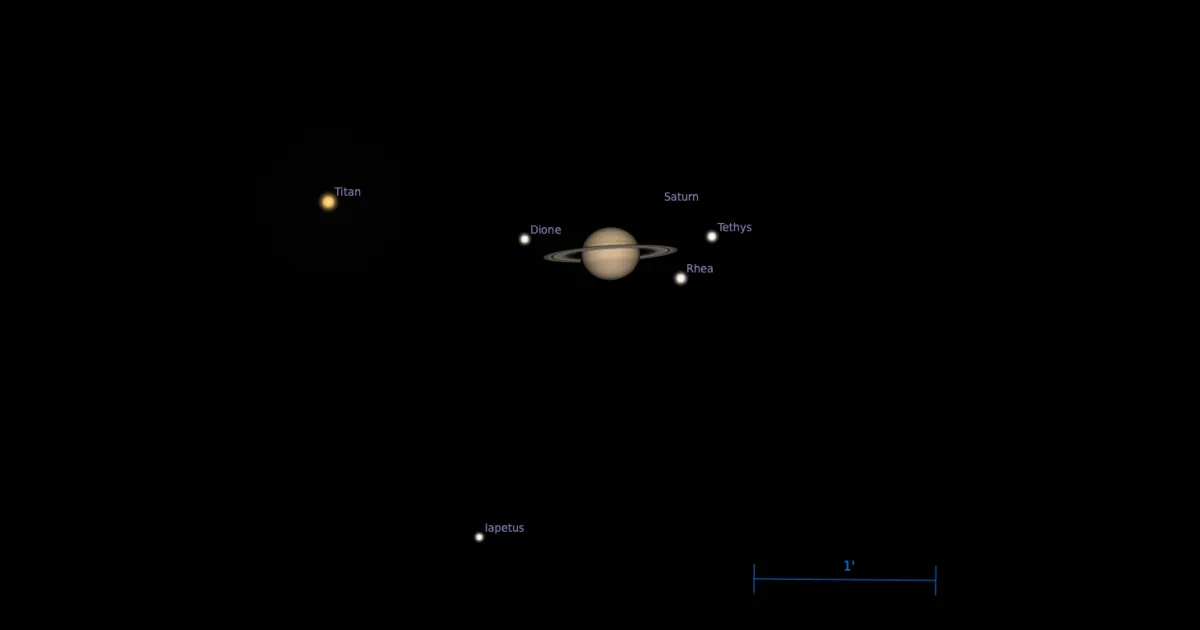
Saturn's Mysterious Moon Iapetus and Its Orbital Path
According to skywatching notices for late October, Iapetus, one of the most intriguing bodies in the Saturnian system, is taking center stage as it reaches superior conjunction. Following an unusually wide orbital trajectory around the ringed planet, the moon takes nearly 80 days to complete a single revolution. This wide separation and distinct inclination give Iapetus a unique observation profile compared to Saturn's other prominent satellites.
Brightness Swings and the Physics of a Two-Faced World
Iapetus is recognized across planetary astronomy for the dramatic fluctuations in its observed light output. As it orbits Saturn, it rotates in synchrony with its nearly 80-day journey. During this synchronized cycle, its apparent brightness brightens and fades by up to two magnitudes. This phenomenon is driven by the moon's stark compositional dichotomy: one hemisphere is coated in extremely dark material, while the trailing hemisphere consists predominantly of highly reflective water ice.
Superior Conjunction and Viewing Highlights
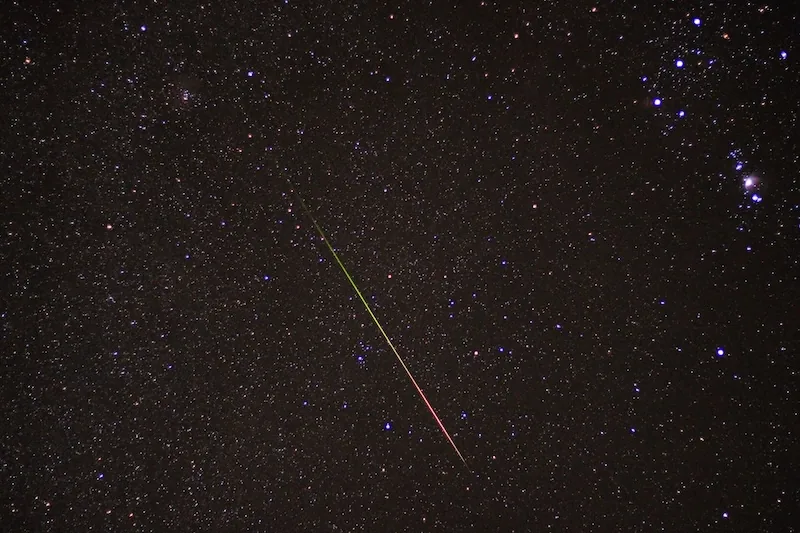
The transition through superior conjunction offers an engaging opportunity for astronomers tracking celestial alignments within the outer Solar System. Alongside events such as the early-morning Orionid meteor displays occurring during the same timeframe, monitoring Iapetus presents a rewarding target for observers equipped with telescopes. Studying the brightness variations of Iapetus continues to illustrate the complex orbital and surface dynamics present among Saturn's outer moons.


Comments
Loading comments...