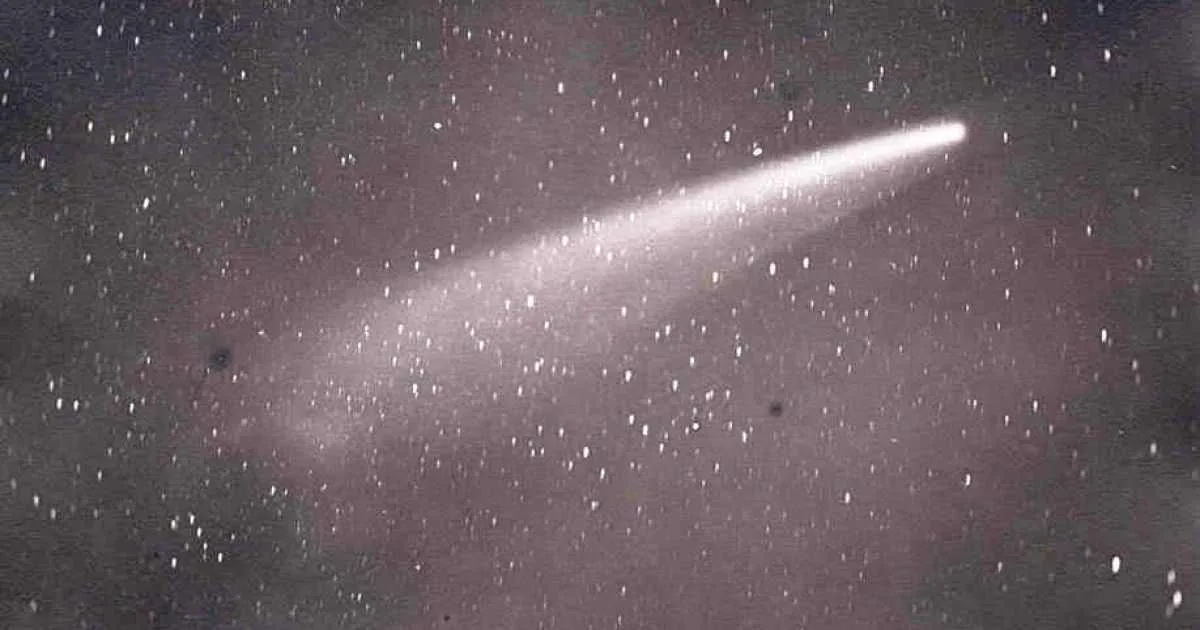
A Blazing Visitor Above the Southern Skies
In early September 1882, an extraordinary comet was sighted from the Cape of Good Hope in South Africa, marking the beginning of a historic astronomical event. Over the subsequent weeks, the celestial body brightened dramatically, reaching an impressive magnitude of -2 by September 15.
Perihelion Visibility in Broad Daylight
Just two days later, at its perihelion on September 17, the comet became exceptionally luminous, bright enough to be seen with the naked eye even during the day. David Gill, serving as the director of the Royal Observatory at the Cape of Good Hope at the time, closely tracked this rare occurrence.
Revolutionizing Astrophotographic Science
The brilliance of the Great Comet of 1882 catalyzed a historic shift in how astronomers captured the cosmos using photographic plates attached to telescopes. The successful exposures made during its passage proved the immense value of photography for charting the stars, laying the groundwork for modern astronomical imaging.

Comments
Loading comments...