
The Final Descent of a Prolific Cosmic Sentinel
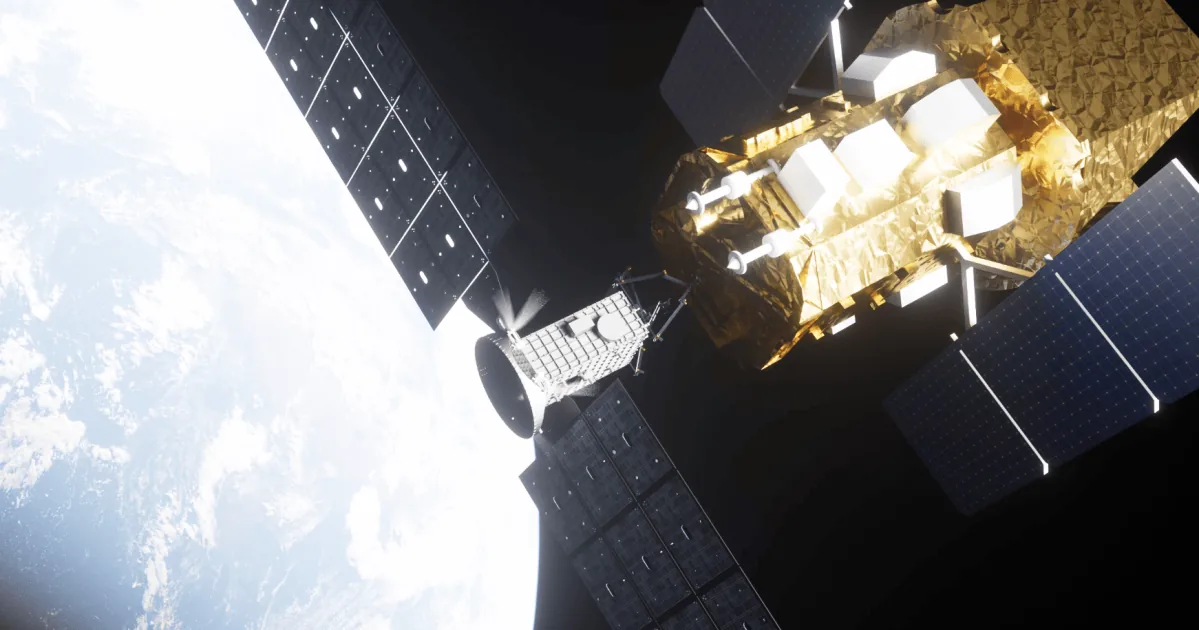
NASA's Neil Gehrels Swift Observatory has concluded its operational life by making an uncontrolled re-entry into Earth's atmosphere, capping off an extraordinary 22-year tenure in orbit. The mission, directed by NASA, stands as one of the most successful orbital observatories ever launched to probe the violent, transient universe.
Two Decades of Tracking High-Energy Transients
Throughout its 22-year lifespan, Swift served as the premier fast-response observatory dedicated to detecting and tracking gamma-ray bursts (GRBs). Utilizing an agile multi-wavelength instrumentation suite, the spacecraft was engineered to swivel within seconds to capture afterglows across gamma-ray, X-ray, ultraviolet, and optical wavelengths before they faded away into the cosmic background.
Scientific Legacy and the Conclusion of a Milestone Mission
The uncontrolled atmospheric entry marks the ultimate chapter for a mission that fundamentally redefined our understanding of black hole formation, neutron star mergers, and supernova mechanics. Swift's archive remains a baseline reference for observational astrophysics, leaving an enduring imprint on high-energy astrophysics and rapid transient monitoring.


Comments
Loading comments...