Origin and Background of the Cosmic Microwave Background
The cosmic microwave background (CMB) is a faint glow dating back to the early universe, long before the emergence of stars or galaxies. Originating roughly 380,000 years after the Big Bang, this ancient radiation permeates space in all directions. For astrophysicists, this remnant light serves as a direct window into the infant stages of the cosmos.
Detecting and mapping this cosmic fossil has been one of the most critical tools for determining the age, expansion rate, and overall composition of the universe. Observations conducted via advanced telescopes provide invaluable insights into how early cosmic structures began to form.
Measurement Details and Fluctuation Analysis
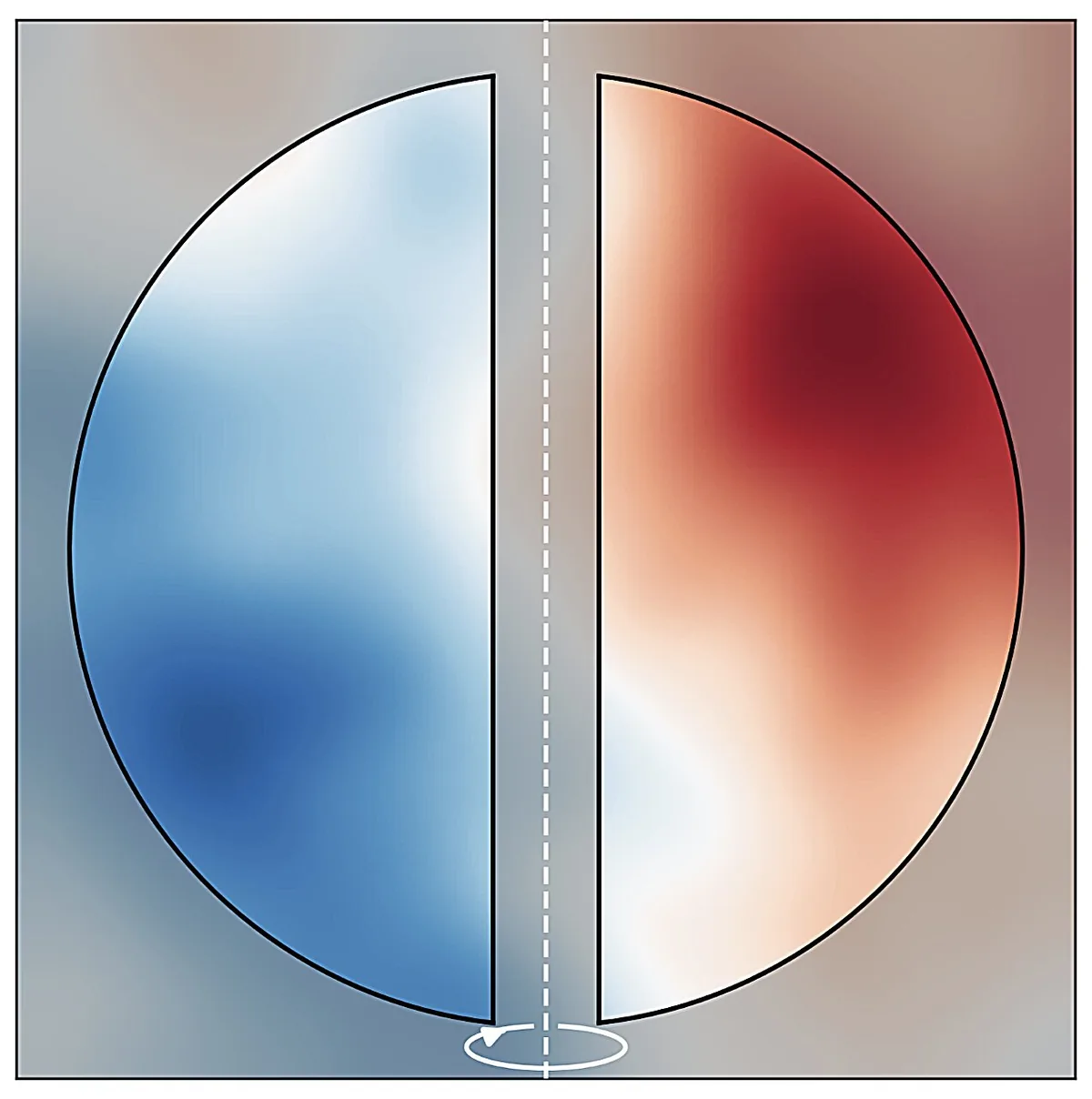
Astronomers analyze minute temperature and intensity fluctuations within the cosmic microwave background. Recent investigations demonstrate that these radiation maps contain distinct signatures corresponding to gas flowing within massive galaxy clusters. Spectral and wavelength measurements reveal how gravity shapes the path of this background light.
The quantitative light data highlight the distribution and dynamics of gas moving around and through these immense cosmic structures. As the gas flows, it leaves subtle imprints on the microwave wavelengths, which can be identified through detailed technical analysis.
Impact on Cosmological Models and Future Observations
Confirming gas flows in galaxy clusters through CMB data provides essential refinement to current models of universe evolution and galaxy formation. Understanding how large-scale structures accumulate gas over time offers deeper insight into the influence of dark matter and gravitational physics.
Upcoming high-precision observational missions aim to map these microwave fluctuations with even higher resolution. Future analytical work will continue to clarify the mechanics of cosmic structure growth and the fundamental dynamics governing the universe.
Comments
Loading comments...