Discovery Background and Announcement
Astronomers have added another world outside our solar system to the cosmic catalog. Officially announced in 2026, the exoplanet designated KMT-2026-BLG-0083L b stands out due to its massive size and wide orbit. This new finding from exoplanet surveys provides valuable data for understanding the diversity and structural characteristics of distant planetary systems.
Physical Characteristics and Orbital Data
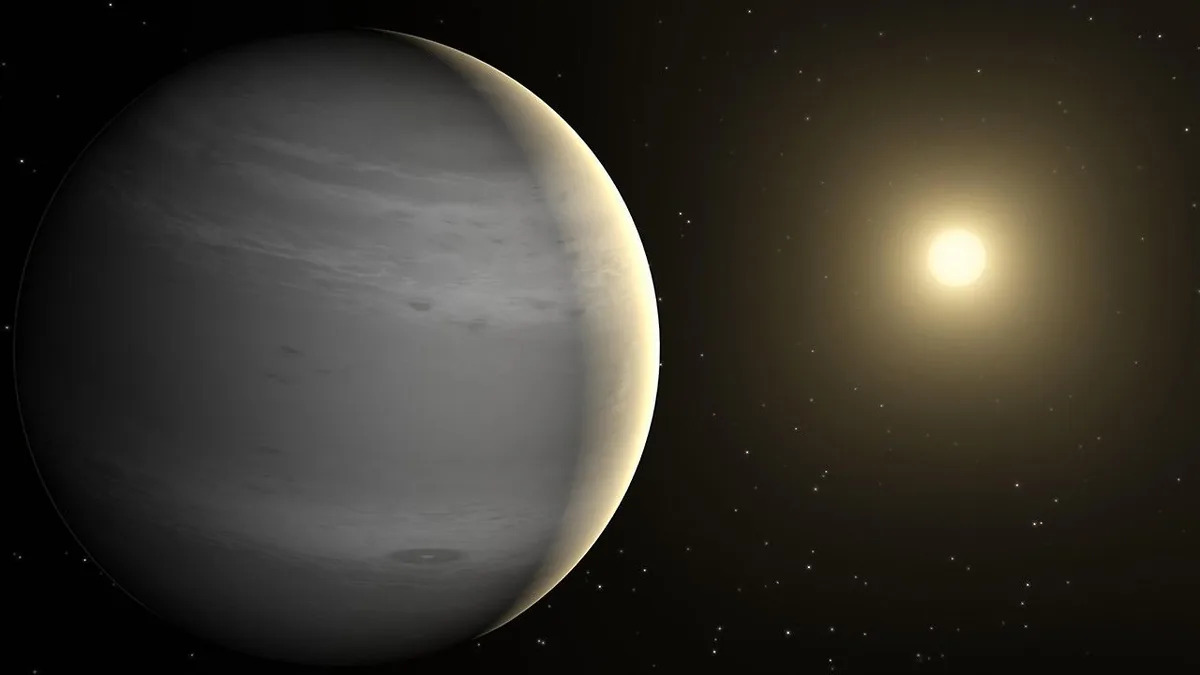
Detailed analyses and measurements confirm that KMT-2026-BLG-0083L b is a gas giant exoplanet. Boasting a mass equal to 2.65 times that of Jupiter, the largest planet in our solar system, this massive celestial body orbits at a considerable distance from its host star. Located at 10.57 astronomical units (AU) from its star, the planet takes 49.6 years to complete a single orbital revolution.
Scientific Significance for Planetary Systems
Detecting gas giants located far from their host stars with such lengthy orbital periods is crucial for testing planetary formation models. Studying the KMT-2026-BLG-0083L b system will enhance our understanding of how distant giant planets evolve and shape their surrounding stellar environments.
Comments
Loading comments...