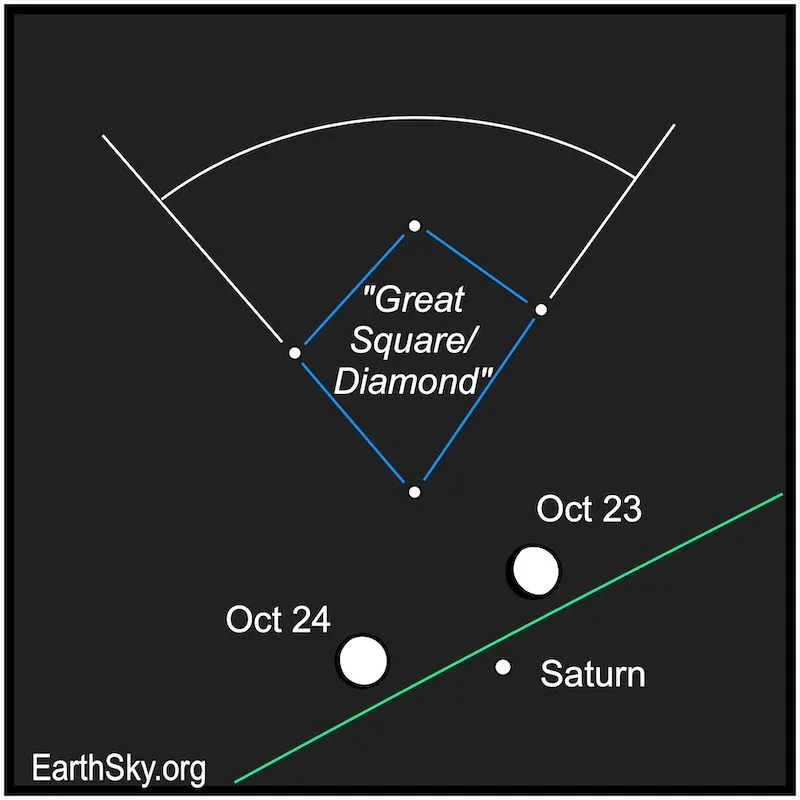
A Familiar Celestial Geometry in October
Stargazing across seasonal transitions offers skywatchers an ever-changing canvas of geometric patterns and evocative stellar alignments. With the arrival of autumn in the northern hemisphere, one of the most prominent constellations taking center stage in the evening sky is Pegasus, named after the mythical winged horse. At the heart of this ancient constellation lies the Great Square of Pegasus, an asterism formed by four prominent stars that command attention as they climb high into the clear autumn nights.
A Seasonal Tilt Resembling a Baseball Diamond
During October evenings, the Great Square of Pegasus does not appear as a level, horizontal square to observers on the ground. Instead, the rotation of the celestial sphere presents this quadrilateral tilted prominently onto one of its corners. This particular orientation creates the distinct outline of a classic baseball diamond, complete with home plate and surrounding bases outlined by the stars. The timing of this geometric display coincides naturally with baseball's annual World Series, offering a playful celestial tribute visible to stargazers throughout the month.
Stargazing Orientation and Seasonal Transitions
Asterisms such as the Great Square play a vital educational and practical role in observational astronomy, serving as navigational anchors across the night sky. By identifying the tilted diamond of Pegasus during crisp October nights, amateur astronomers and casual observers can easily orient themselves and explore the surrounding autumn constellations. Connecting celestial patterns with cultural and seasonal events continues a long human tradition of reading the night sky through engaging and memorable visual associations.
Comments
Loading comments...