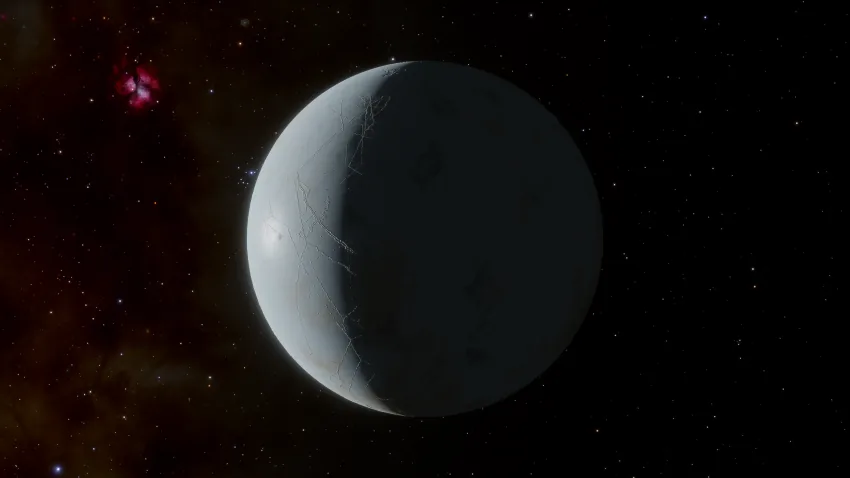
A Mysterious Planet Option on the Outer Edges of the Solar System
Exciting new clues suggest that a hidden planet, not yet directly detected, may exist in the extremely distant and cold reaches of the Solar System beyond Neptune. An advanced simulation model developed by researchers focuses on examining the strange, unexpected orbital behaviors of small, icy bodies far from the Sun. Detailed computer modeling reveals that a terrestrial planet or massive icy world roughly 1.5 to 2 times the mass of Earth could be directly influencing orbital dynamics in this region.
Orbital Simulations and Technical Analysis
Simulating the complex orbital behavior of trans-Neptunian objects (TNOs), scientists factored in a hypothetical body exerting gravitational influence hundreds of astronomical units from the Sun. Precise calculations demonstrate that this theoretical planet accurately accounts for deviations in orbital inclinations and clustering patterns among distant icy dwarf bodies. Orbital mechanics models indicate that no other mechanism explains these angular momentum anomalies as consistently.
Impact on Solar System Models and Future Work
This ambitious study may require re-evaluating established theories regarding Solar System formation, early planetary migration, and the architecture of its outer boundary. If verified, the discovery would fundamentally reshape how planetary scientists view the evolution of our cosmic neighborhood. Researchers plan to search for direct infrared signatures and utilize next-generation observatories like the Vera C. Rubin Observatory to confirm the planet's precise location.
Comments
Loading comments...