Deep Radio Observations with FAST
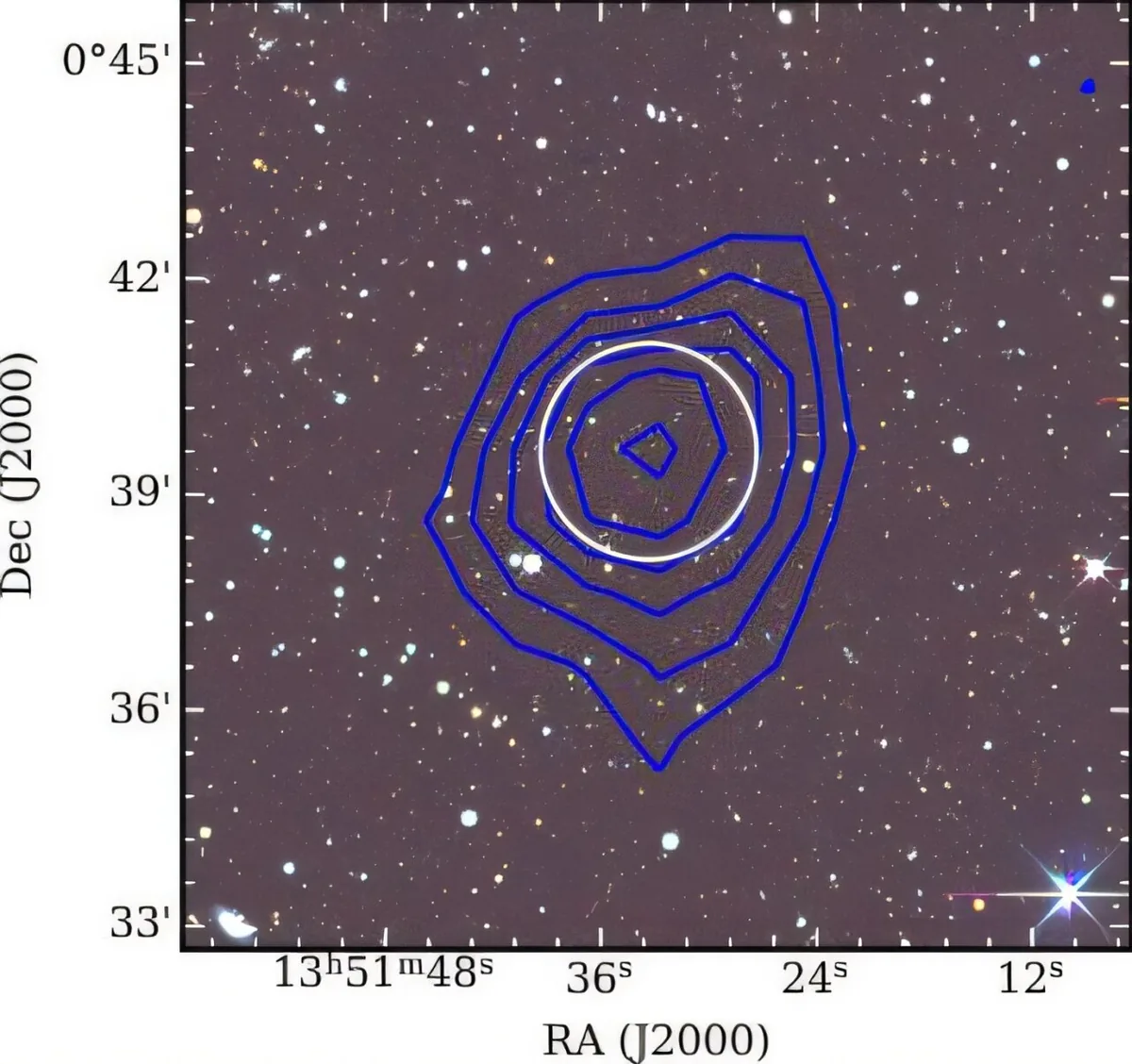
In a study led by Qingzheng Yu and collaborators, published in The Astrophysical Journal Letters, astronomers deployed China's Five-hundred-meter Aperture Spherical radio Telescope (FAST) to scrutinize the gaseous environment surrounding Hickson Compact Group 100 (HCG 100). The observatory's unprecedented sensitivity enabled the detection of extremely diffuse gas emission.
Megaparsec-Scale Neutral Hydrogen Reservoirs
The FAST data revealed a massive, extended neutral hydrogen (HI) structure spanning megaparsec scales around the compact group. Kinematic and morphological signatures in the radio spectral lines suggest that this vast reservoir consists either of tidal debris stripped away during intense gravitational encounters between member galaxies or pristine gas accreting directly from the cosmic web.
Implications for Galaxy Evolution and Cosmic Structure
Neutral hydrogen is the primary fuel for future star formation, and mapping its large-scale distribution provides crucial clues about the growth of galaxies over cosmic time. These findings offer rare empirical constraints for cosmological simulations of gas recycling, shedding light on the mechanisms that channel cold gas into dense galactic neighborhoods.

Comments
Loading comments...