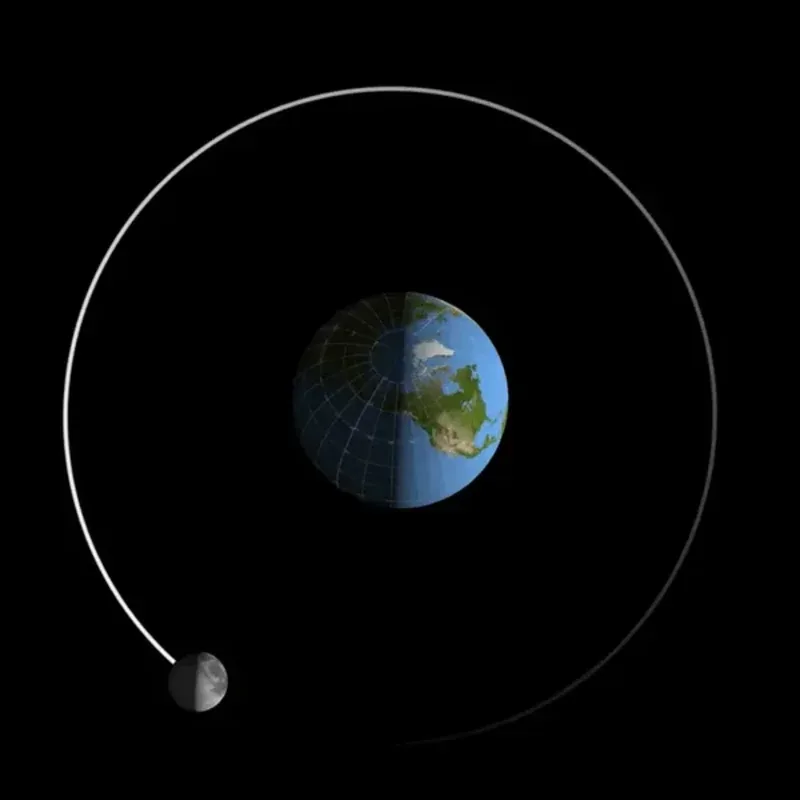
Lunar Orbit and the Formation of Phases
As the Moon continuously orbits Earth, the portion of its sunlit day side visible from our perspective shifts constantly. This orbital geometry creates the familiar progression of lunar phases observed from night to night.
Four Tips to Master Lunar Phases
In a guide published by EarthSky, four practical tips are highlighted to help people understand moon phases. These tips break down how the Moon's relative position to the Earth and Sun influences the fraction of light we see.
Enhancing Night Sky Observations
Grasping the mechanics behind lunar phases is essential for planning stargazing sessions. Knowing how and why the Moon's illuminated face changes builds foundational knowledge for amateur astronomers.
Comments
Loading comments...