Orbital Data Centers and Mass Constraints
Dr. Slava Turyshev of NASA's Jet Propulsion Laboratory has authored a series of papers exploring the core constraints surrounding orbital data centers in space. Mass remains one of the most critical factors in spaceflight missions, and the power generation systems required to operate data centers contribute significantly to that overall weight. While solar panels are commonly utilized to supply energy for space platforms, their substantial weight presents a major engineering hurdle for high-power data processing facilities in orbit.
Nuclear Power as an Alternative to Solar Arrays
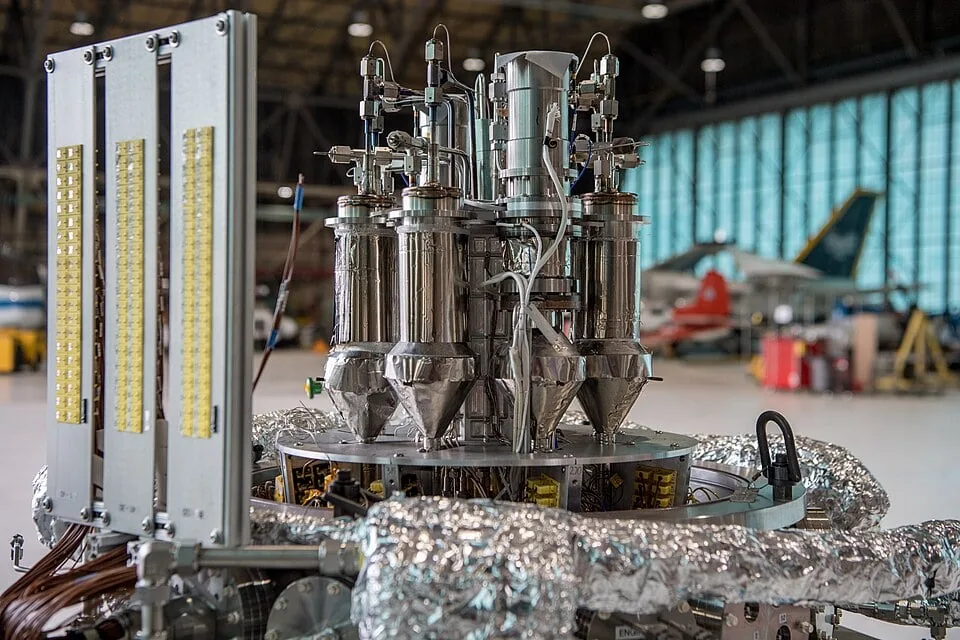
With nuclear energy currently experiencing renewed interest in space applications, it has emerged as a potential power source for the orbital data center revolution. Nuclear reactors offer the capability to generate continuous and high-density power in the harsh space environment. In a new paper published as a preprint on arXiv, Dr. Turyshev examines whether nuclear systems can overcome the weight and power limitations associated with traditional solar array designs.
Energy Strategies Based on Mission Requirements
The findings indicate that there is no one-size-fits-all solution for powering orbital data centers. Instead, selecting between solar panels, nuclear reactors, or a combined approach depends entirely on the specific requirements of the mission. Factors such as payload scale, operational orbit, mission lifespan, and mass allocations dictate the optimal power architecture, paving the way for future space-based computing infrastructure.

Comments
Loading comments...