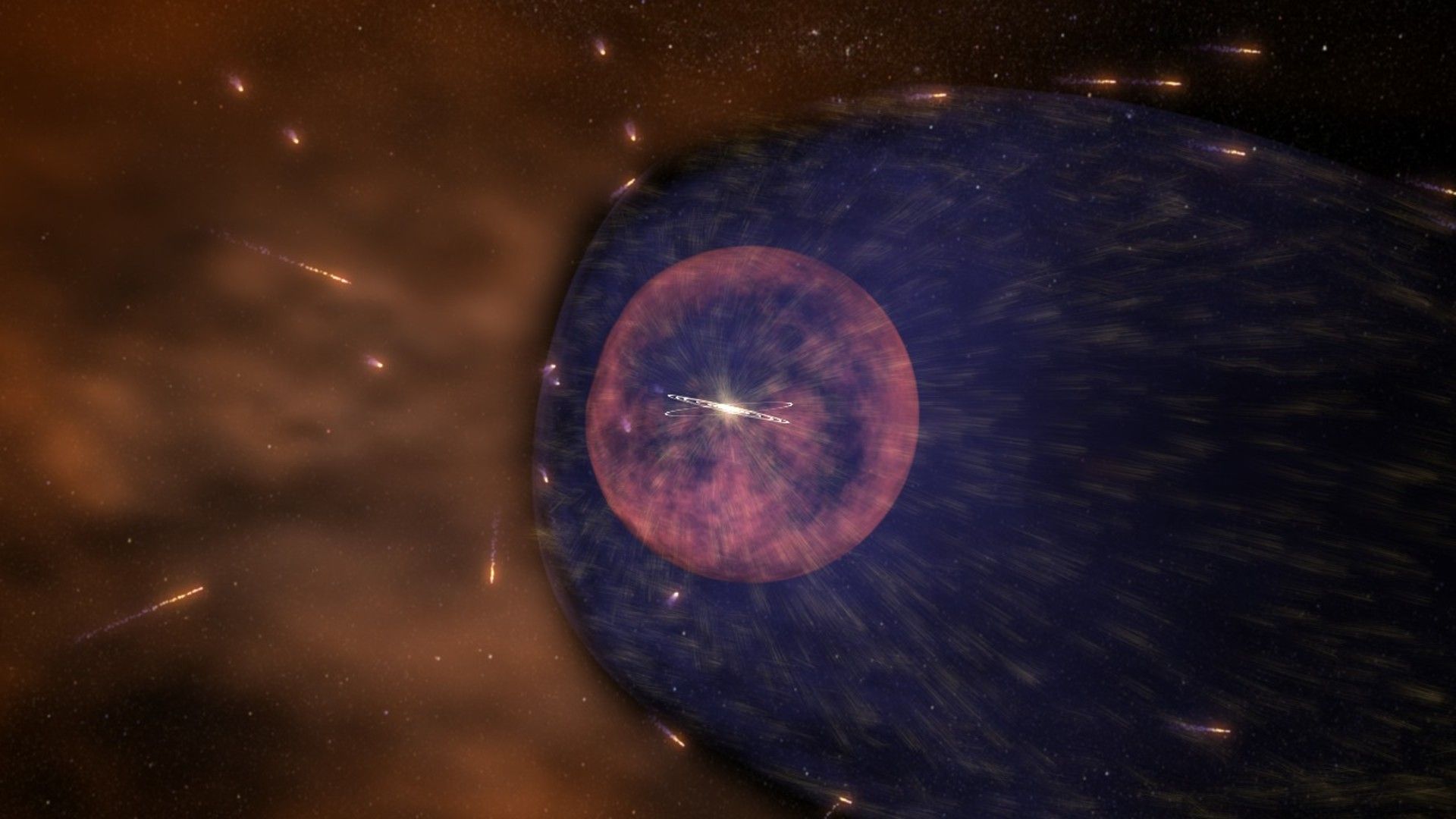
Where Does the Solar System Truly End?
The exact boundary where our solar system gives way to interstellar space has long been a foundational question in astrophysics. Conventional models typically regard the heliopause—where the solar wind yields to the interstellar medium—or the outer fringes of the theoretical Oort Cloud as the terminal boundary. However, a new evaluation put forward by two prominent space scientists suggests that these traditional boundaries may be inadequate and that the Sun's realm must be re-examined within the broader gravitational architecture of the Milky Way.
Galactic Gravity and the Influence of Dark Matter
At the heart of the scientists' proposal is the realization that the Sun cannot be treated as an isolated gravitational anchor; rather, it is a star operating within the Milky Way's vast gravitational landscape. The unseen dark matter halo, which comprises a major fraction of the galaxy's mass, alongside galactic tidal forces, directly shapes the dynamic behavior of objects at the outermost periphery of the solar system. The researchers emphasize that the true edge should be defined where the Sun's gravitational dominance yields to the combined gravitational forces of the galaxy and its dark matter distribution.
Implications for Planetary and Galactic Models
Redefining the edge of the solar system based on galactic gravity carries profound implications, not only for mapping our own cosmic neighborhood but also for modeling exoplanetary systems across the galaxy. The orbital stability of distant icy bodies and cometary reservoirs may need reassessment through the lens of interstellar tidal interactions. Scientists point toward refined gravitational mapping of the Milky Way to better characterize where our home system truly ends and the wider galaxy begins.



Comments
Loading comments...