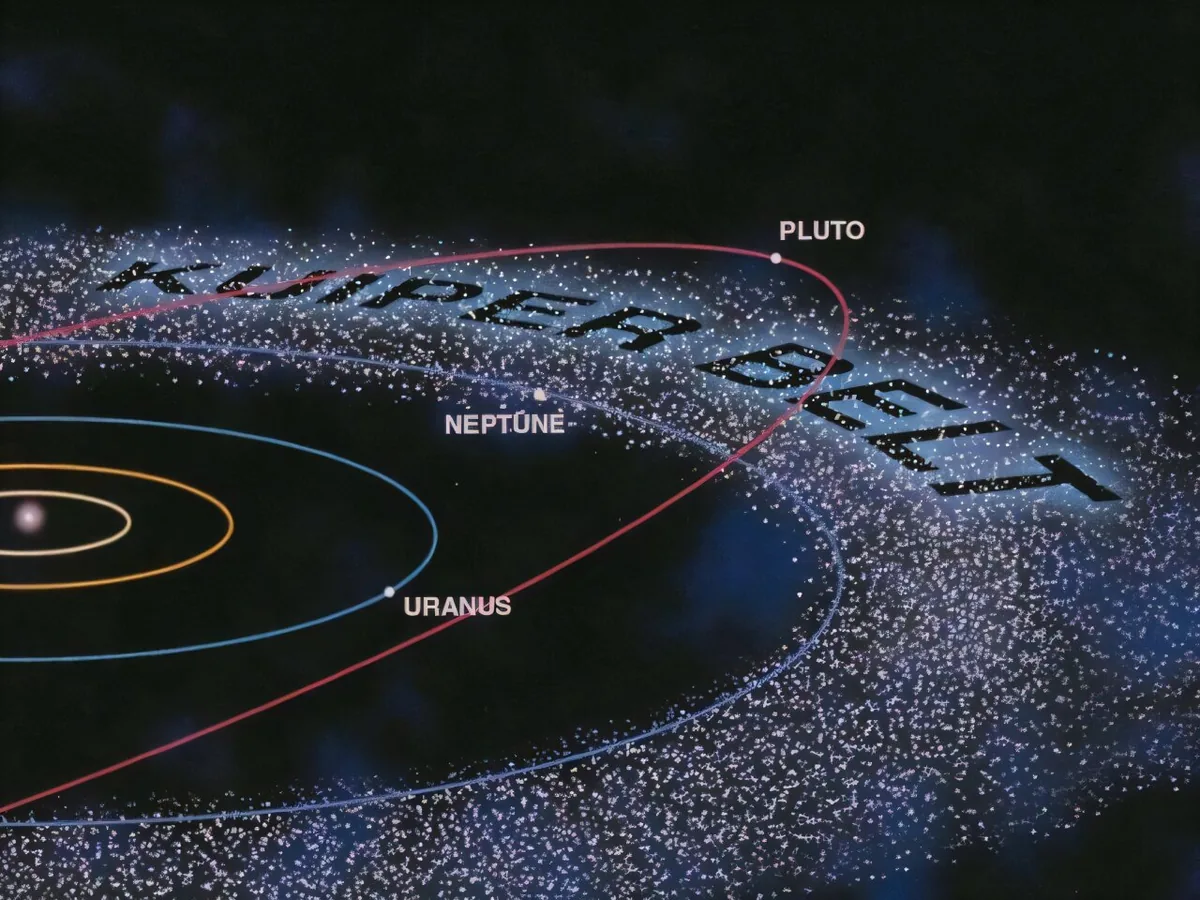
Mysterious Orbits in the Kuiper Belt
In the cold and dark region of the Kuiper belt beyond Neptune, certain icy bodies exhibit orbital paths that differ significantly from typical planetary motions. Observations reveal that some objects travel on steeply tilted paths, while others remain exceptionally distant from the giant planets even at their closest approach to the Sun.
Simulation Studies and New Models
Astronomers conducted computer simulations to account for these two distinct populations of objects in the Kuiper belt. The modeling results suggest that a hidden planet with roughly twice Earth's mass could exist in the outer reaches of the solar system. A planet of this mass provides a plausible explanation for both the orbital inclinations and the extreme distances observed in these object groups.
Implications for Solar System Models and Future Work
This simulation study carries notable scientific meaning for current physical models of solar system evolution and structure. Confirming the presence of such a candidate planet could redefine our understanding of Kuiper belt dynamics and outer planet formation. Researchers plan to use further observational techniques to search for direct evidence of this body and measure its gravitational footprint on surrounding objects.

Comments
Loading comments...