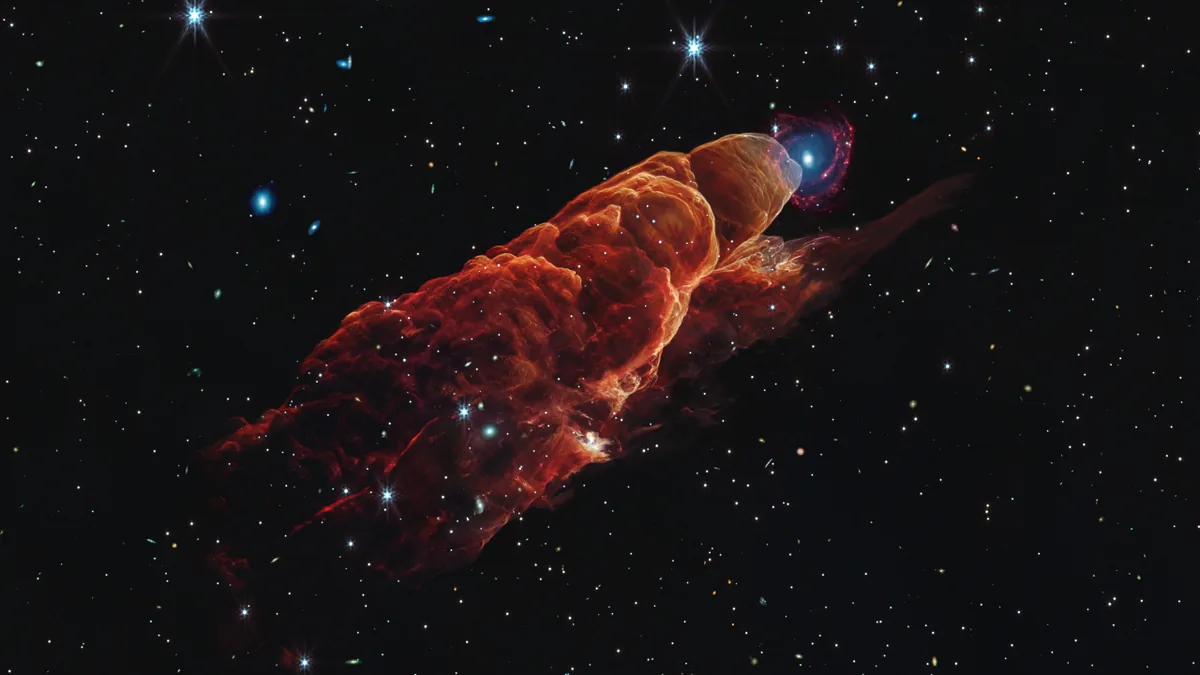
Artificial Intelligence in Astrophysical Research
Modern astrophysics and cosmology increasingly rely on massive data archives generated by wide-field survey telescopes and large-scale computational simulations. To address these data-intensive demands, NASA's Artificial Intelligence and Machine Learning Science and Technology Interest Group (AI/ML STIG) presents a dedicated seminar on October 19, 2026. Featured speaker Moritz Münchmeyer from the University of Wisconsin-Madison explores how cutting-edge algorithmic frameworks can transform empirical data analysis and theoretical parameter estimation across astronomy.
Algorithmic Paradigms: Fine-Tuning and Self-Learning
The lecture examines three interconnected machine learning strategies: fine-tuning, reinforcement learning, and self-learning. Self-supervised foundation models can be trained on vast unlabeled astronomical datasets, capturing underlying structural features across sky surveys without manual human annotation. Once these representations are established, fine-tuning protocols rapidly adapt the network to specialized tasks, such as resolving weak gravitational lensing distortions, classifying peculiar galaxy morphologies, or isolating subtle temperature fluctuations in the cosmic microwave background.
Advancing Cosmology in the Era of Big Data
Reinforcement learning algorithms further offer powerful optimization tools, ranging from dynamic telescope scheduling to automated hypothesis exploration within complex cosmological simulations. As upcoming sky surveys transition observational astronomy into the petabyte scale, traditional data reduction pipelines face severe computational bottlenecks. Integrating fine-tuned, self-learning architectures directly into data processing frameworks accelerates the synthesis between physical theories and observational measurements, outlining an essential operational paradigm for future space science initiatives.
Comments
Loading comments...