ALMA Observes a Star in Transition
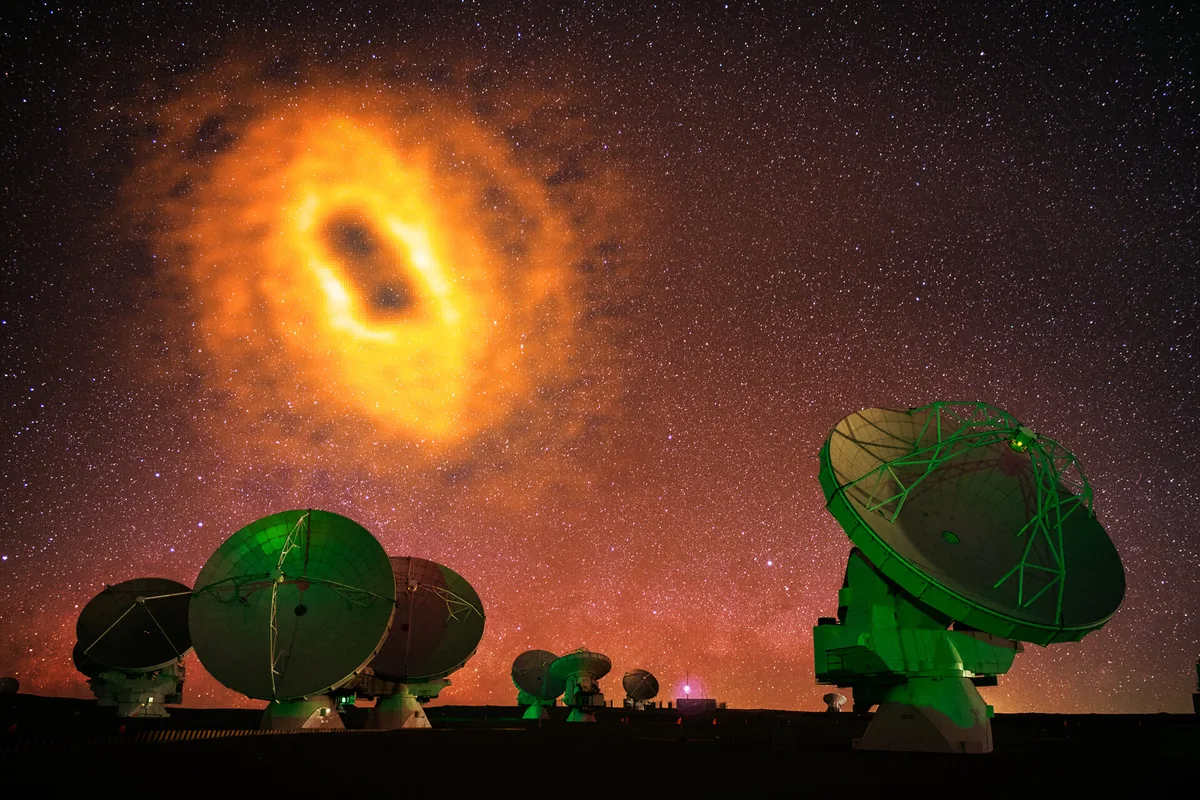
Stars like our Sun do not die quietly. In their final evolutionary act, they swell into red giants, shed their outer layers into space, and leave behind a glowing, strikingly sculpted cloud of gas known as a planetary nebula. Utilizing the Atacama Large Millimeter/submillimeter Array (ALMA), astronomers have caught a star in this fleeting transition, revealing a giant gas ring and a budding hourglass shape forming around it.
Observational Details and Gas Structure Analysis
The transformation from a red giant to a planetary nebula is thought to take only a few thousand years—a mere blink in the multimillion-year lifespan of a star. Because of this short timeframe, catching a star directly during this phase is extremely rare. ALMA's high-resolution measurements allowed researchers to capture the dynamic gas ring and trace the emerging hourglass structure created by the star's last gasps.
Scientific Significance for Stellar Physics
This observation provides critical insight into the mass-loss mechanisms of dying stars and how complex nebular geometries develop over time. By capturing a star right in the act of sculpting its surrounding environment, researchers gain invaluable data to refine models of stellar evolution and guide future observational campaigns on planetary nebulae.

Comments
Loading comments...