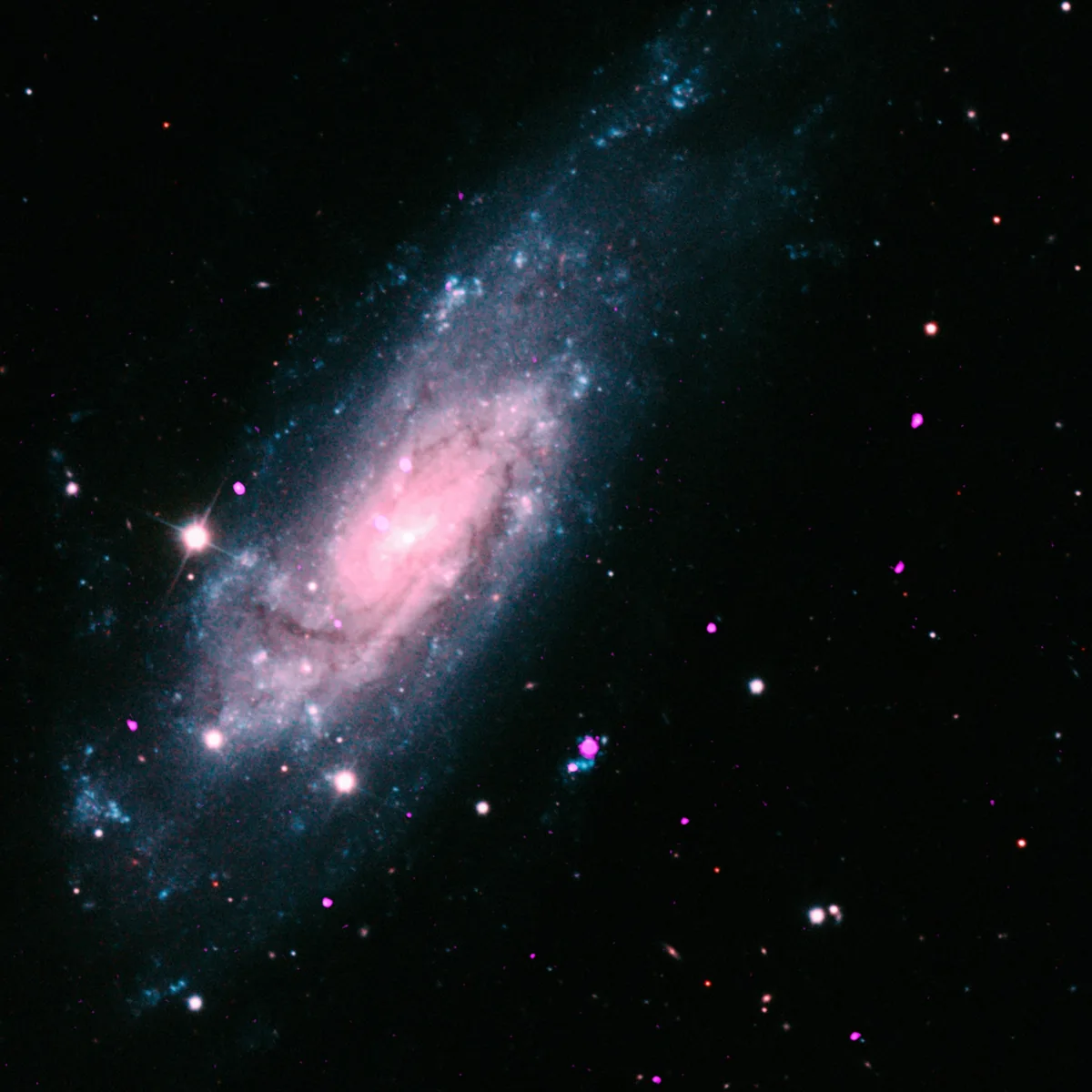
Massive Star AT 2016blu and Chandra Observations
Using NASA's Chandra X-ray Observatory, astronomers have examined one of the most volatile giant stars in the universe. Located in the spiral galaxy NGC 4559, approximately 30 million light-years from Earth, the massive and unstable star designated as AT 2016blu has attracted significant attention due to its repeated violent outbursts. Data and images released on November 9, 2026, revealed the underlying triggering mechanism driving these energetic events.
X-ray Measurements and Outburst Dynamics
Chandra's high-resolution X-ray observations provided crucial detailed measurements of the high-energy processes occurring within AT 2016blu. The highly volatile giant star exhibits massive energy releases captured across X-ray wavelengths. Researchers identified the physical conditions and triggers in the star's outer layers that lead to recurring mass loss and dramatic brightness variations.
Insights into Massive Star Evolution
These findings provide critical insights into the instability phases and mass-loss mechanisms that massive stars undergo before reaching supernova stages. The behavior of AT 2016blu in the spiral galaxy NGC 4559 offers essential observational data to refine theoretical models of stellar evolution. Scientists plan to continue monitoring this unstable giant star using Chandra and other space observatories to track its future activity.

Comments
Loading comments...