Rotating Jets in the Solar Atmosphere
Solar spicules, slender plasma jets commonly observed in the chromosphere, lift relatively cool plasma from the lower solar atmosphere and carry energy upward, often rotating as they evolve. Simultaneously, small-scale vortices frequently form between convection-driven granules in the photosphere. Astrophysicists have long sought to resolve how these photospheric vortices drive spicule formation and how much mass and energy the rising jets transport into the corona.
Simulations and Magnetic Reconnection Dynamics
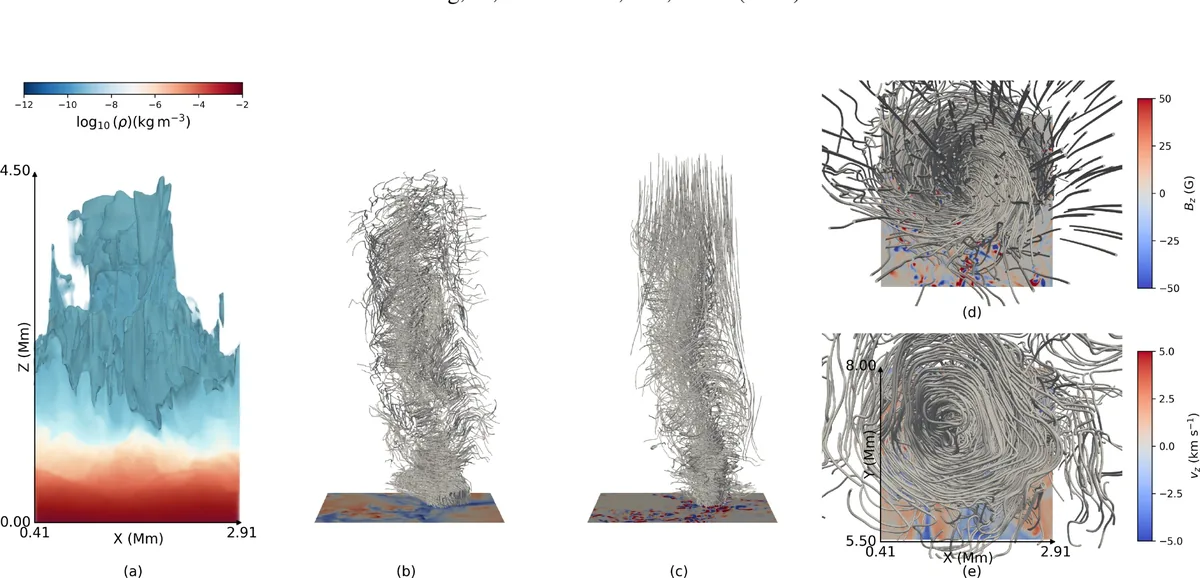
New computer simulations have detailed how photospheric vortices interact with solar magnetic fields. According to the simulation model, magnetic field lines twisted by vortex motion undergo magnetic reconnection, launching and accelerating a rotating plasma jet. Quantitative measurements from these high-resolution models demonstrate the precise mechanism by which the coupled interaction of vortices and reconnecting field lines propels plasma upward from the lower atmosphere.
Solving the Coronal Heating Puzzle
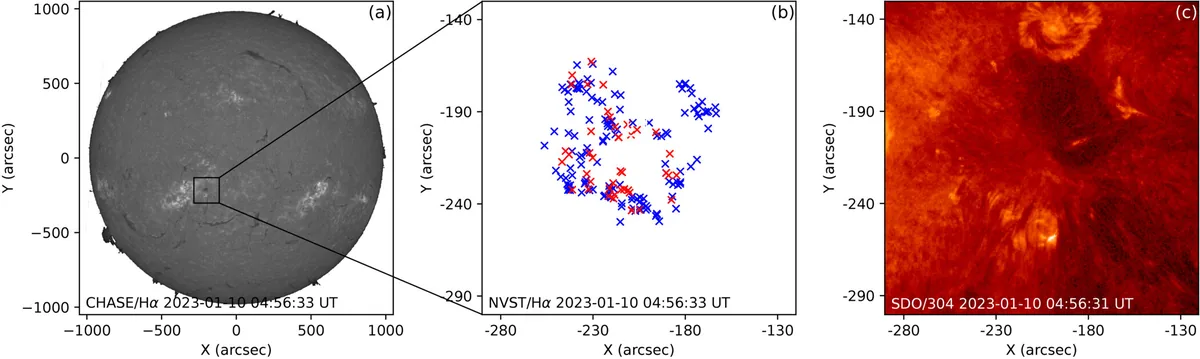
This research provides a vital piece of the puzzle regarding why the solar outer atmosphere is millions of degrees hotter than the lower layers. By modeling the precise amount of mass and energy carried by rotating spicules, scientists gain clearer insight into coronal heating mechanisms and solar wind acceleration. Researchers plan to compare these simulation results with observational data from high-resolution solar telescopes to validate their findings.
Comments
Loading comments...