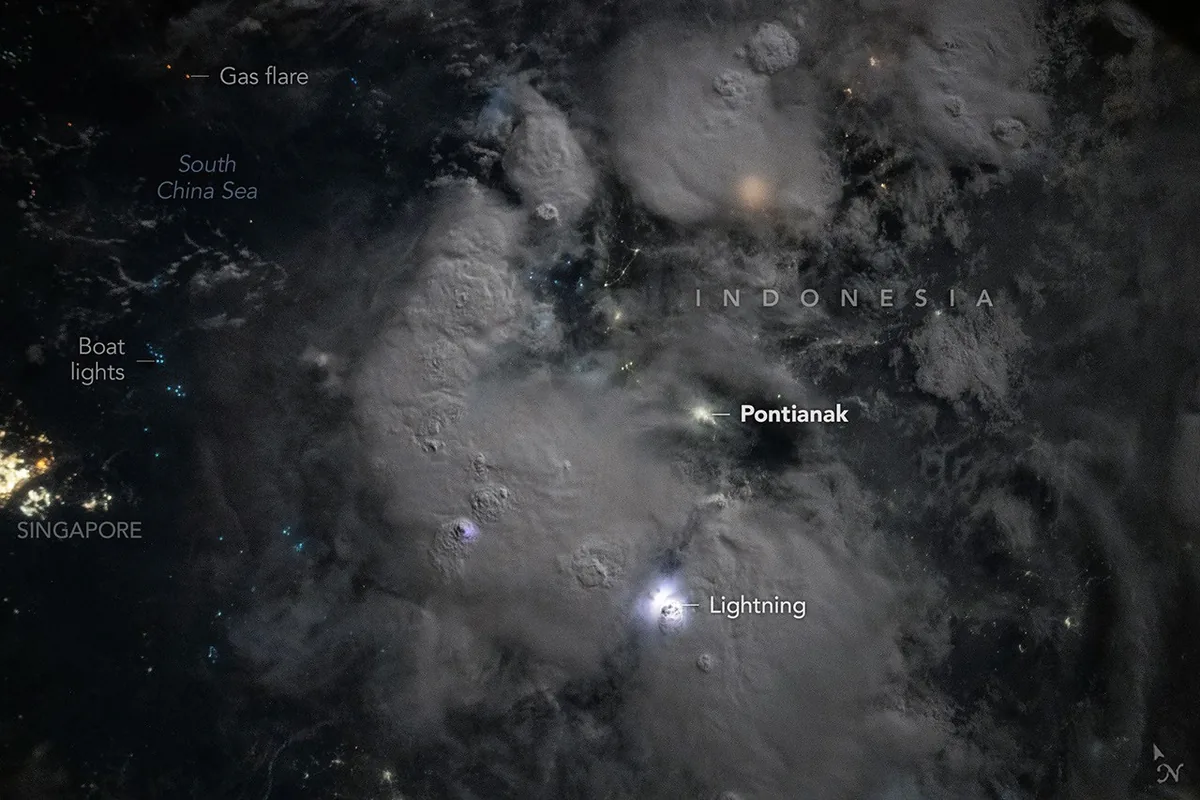
Observing Terrestrial Storms from Orbit
For astronauts operating aboard the International Space Station, gazing down at Earth offers a continuously mesmerizing perspective. Among the various planetary phenomena visible from low Earth orbit, lightning flashes illuminating the night side stand out as some of the most striking sights. Floating hundreds of kilometers above the surface in absolute silence, orbital observers witness these rapid electrical discharges, reminding us of the dynamic nature of our home planet.
Fireworks Traversing from Cloud to Cloud
Seen from above the atmosphere, storm systems resemble natural firework displays. Rather than just striking downward toward the ground, powerful discharges leap horizontally and vertically between cloud layers, lighting up vast weather formations. The unique vantage point of the space station allows researchers to observe how electrical energy disperses across cloud tops and how energy moves through massive convective systems across the globe.
Advancing Our Understanding of Global Weather
Studying these storm dynamics from orbit provides critical context for global atmospheric and weather models. Tracking lightning patterns across continents helps scientists refine their understanding of atmospheric electricity and its interactions with the broader climate system. These spectacular views captured by astronauts continue to inspire both public wonder and deeper scientific appreciation for the energetic processes governing Earth's atmosphere.

Comments
Loading comments...