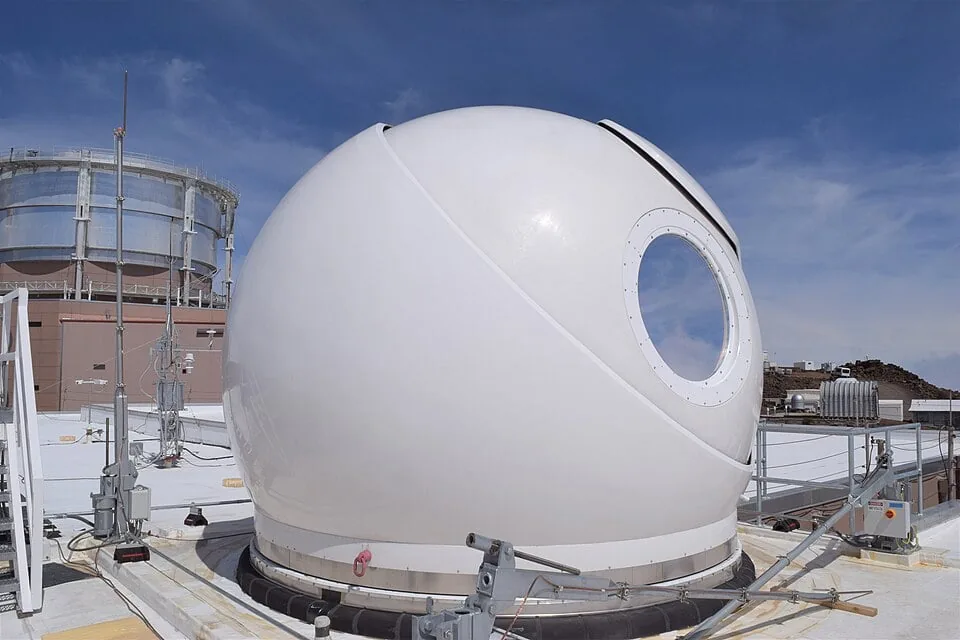
Transition from Radio Frequencies to Laser Technology
Since the launch of Sputnik, humanity has communicated with its spacecraft primarily through radio waves. While radio systems excel at operating reliably across virtually any weather condition, they are reaching their physical bandwidth limits. Strict frequency regulations by international bodies such as the International Telecommunication Union, combined with exponentially growing data demands from space missions, make exploring alternative solutions necessary.
Technical Limits and System Reliability of Laser Communication
Infrared lasers have emerged as the primary solution to overcome radio bandwidth bottlenecks, promising extraordinarily high data transfer rates. However, in a recent paper released on arXiv, Dr. Slava Turyshev notes that raw transfer speed is not the true limiting factor. Known for his theoretical work on utilizing the Sun's gravity as a giant telescope, Turyshev emphasizes that the main bottleneck lies in the overall reliability of the system.
Future Communication Infrastructure and Next Steps
Because infrared laser wavelengths are heavily attenuated by atmospheric clouds and weather disruptions, ground-based laser communications face severe reliability issues. Despite offering massive speed upgrades, space-based laser links must account for these atmospheric barriers. Future communication models will focus on overcoming weather-induced outages to build robust, high-speed networks for deep space exploration.


Comments
Loading comments...