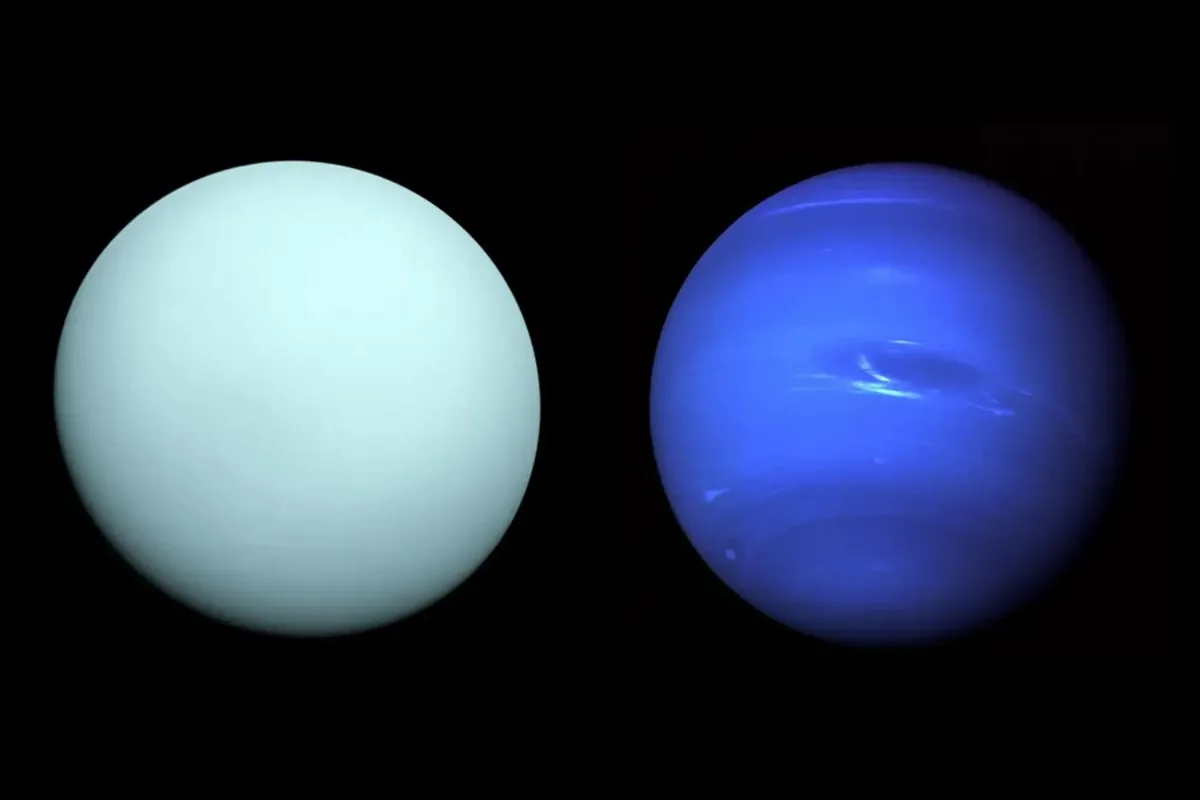
Extreme Conditions in the Depths of Ice Giants
On Earth, water ice exhibits familiar crystalline arrangements governed by stable molecular bonds. However, penetrating into the deep interiors of massive ice giants reveals environmental conditions characterized by extreme pressures rarely matched elsewhere. Scientists studying the internal dynamics and cores of these massive worlds have found that water ice under such conditions cannot retain its conventional state.
Loss of Molecular Identity and Atomic Asymmetry
Under these staggering pressures, water ice ceases to exist in its standard molecular form. The traditional bonds uniting hydrogen and oxygen atoms break down, and the atoms are forced into an unusual structural asymmetry. This exotic transformation fundamentally changes the material's behavior, departing from typical phase boundaries into an unexpected non-molecular state.
Implications for Planetary Modeling and Physics
This bizarre asymmetric behavior of pressurized water ice is critical for refining models of ice giant interiors, internal thermal transport, and planetary magnetic field generation. Deciphering this strange state of matter enhances our understanding of both the giant planets in our solar system and comparable exoplanets across the galaxy.
Comments
Loading comments...