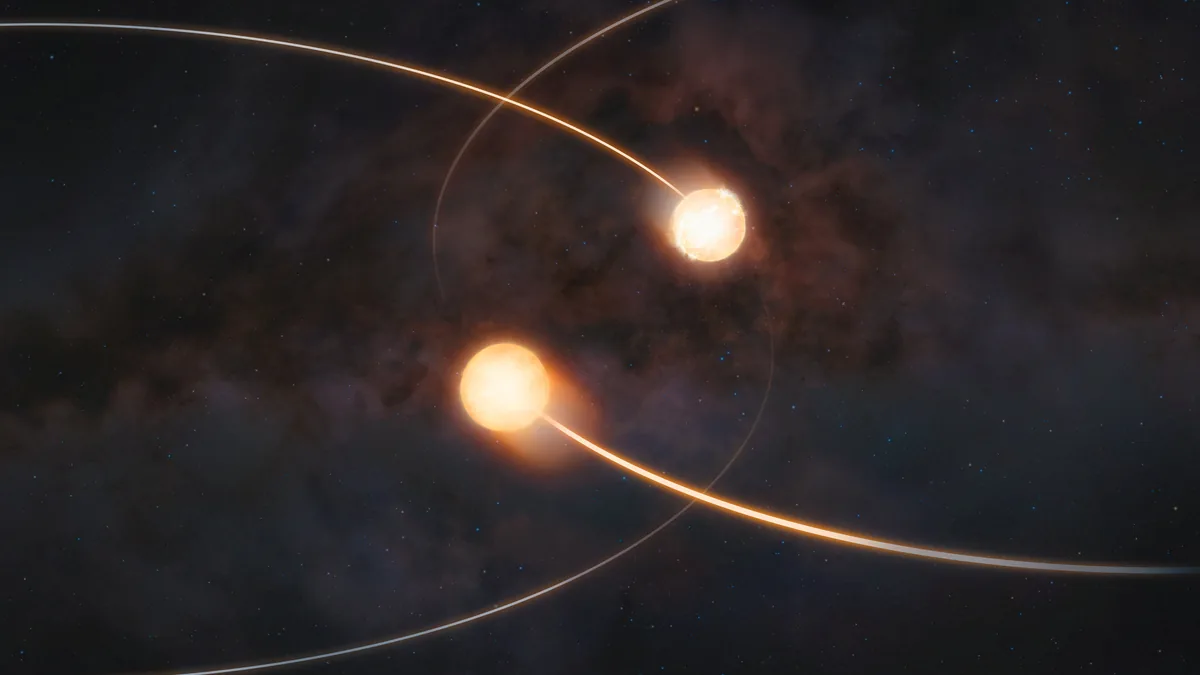
Observing a Red Dwarf Binary System with the VLBA
Astronomers tracked an active binary star system using the Very Long Baseline Array (NSF VLBA), operated by the U.S. National Science Foundation National Radio Astronomy Observatory (NSF NRAO). The study focused on DG CVn, a binary system located approximately 59 light-years from Earth.
Orbit, Mass, and Distance Measurements
Through precise radio observations, researchers measured the orbital parameters, individual masses, and exact distance of the two orbiting red dwarf stars with extraordinary accuracy. The dynamic, flaring nature of these active stars was analyzed in detail.
Impact on Stellar Dynamics and Astrophysical Models
The findings offer valuable insights into the physical characteristics of low-mass, flaring red dwarf stars. These high-precision measurements will enable scientists to refine theoretical models regarding stellar evolution and binary system dynamics.

Comments
Loading comments...