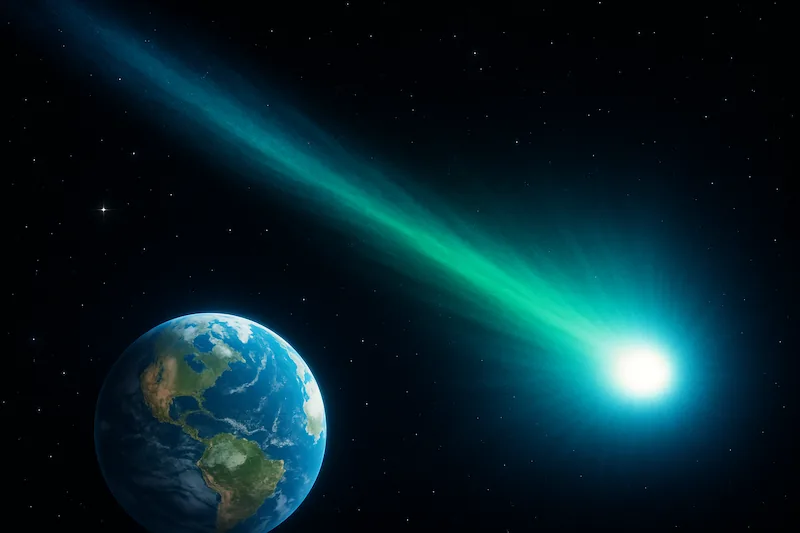
The Panspermia Debate and the Cambridge Analysis
One of the most persistent hypotheses regarding the origins of terrestrial biology posits that essential organic material or microbial life was delivered via cometary impacts. A new study conducted by researchers at the University of Cambridge closely scrutinized the viability of this scenario. By evaluating the mechanics of cometary transport to the early Earth, the team concluded that comets seeding life was an inherently unlikely and exceptionally rare event.
The study sheds light on the stringent physical limitations governing the delivery of delicate chemical compounds. Rather than serving as an efficient distribution network for life across the solar system, comets appear to face catastrophic dynamic hurdles when interacting with planetary atmospheres.
Collision Dynamics and Delivery Constraints
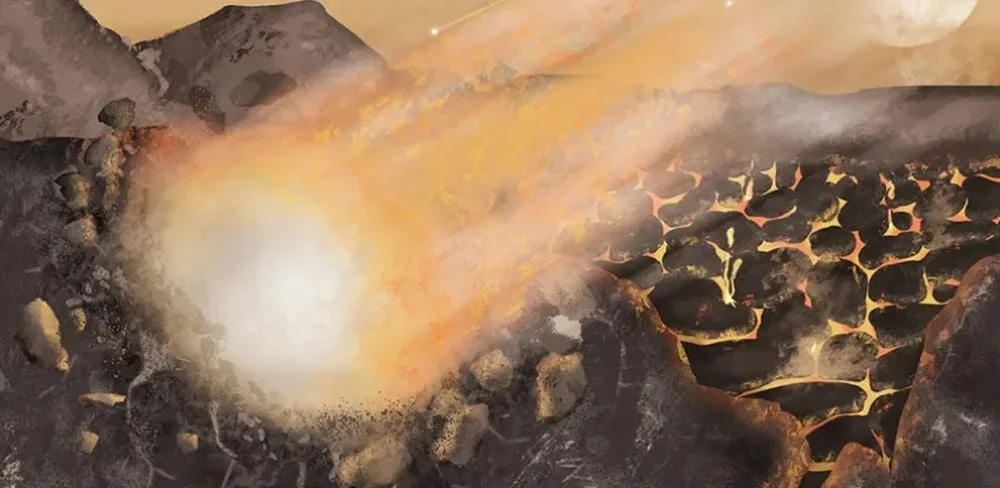
The primary barrier to successful cometary seeding lies in the violent kinetics of planetary impact. As comets fall into a planet's gravitational well, they accelerate to immense velocities. The ensuing atmospheric entry and catastrophic impact generate extreme thermal stress and shock pressures that tend to disintegrate fragile prebiotic molecules rather than preserve them.
The Cambridge research team modeled the precise operational windows in which cometary material could reach a planetary surface intact. The simulations demonstrated that the specific conditions allowing survival—such as exceptionally low impact speeds and gentle angles of incidence—represent statistical anomalies rather than a common mechanism throughout planetary evolution.
Implications for Astrobiology and Terrestrial Origins
This reassessment from the University of Cambridge significantly impacts models exploring prebiotic chemistry. With the cometary seeding pathway marginalized, greater empirical weight is shifted toward endogenous origins, reinforcing the theory that life arose within Earth's own geochemical environments, such as hydrothermal vents or shallow volcanic pools.
Furthermore, these conclusions affect how astrobiologists assess habitability across distant exoplanetary systems. Relying on external cometary delivery to spark biogenesis may be overly optimistic, prompting planetary scientists to prioritize intrinsic planetary geodynamics when searching for signs of life elsewhere in the cosmos.
Comments
Loading comments...