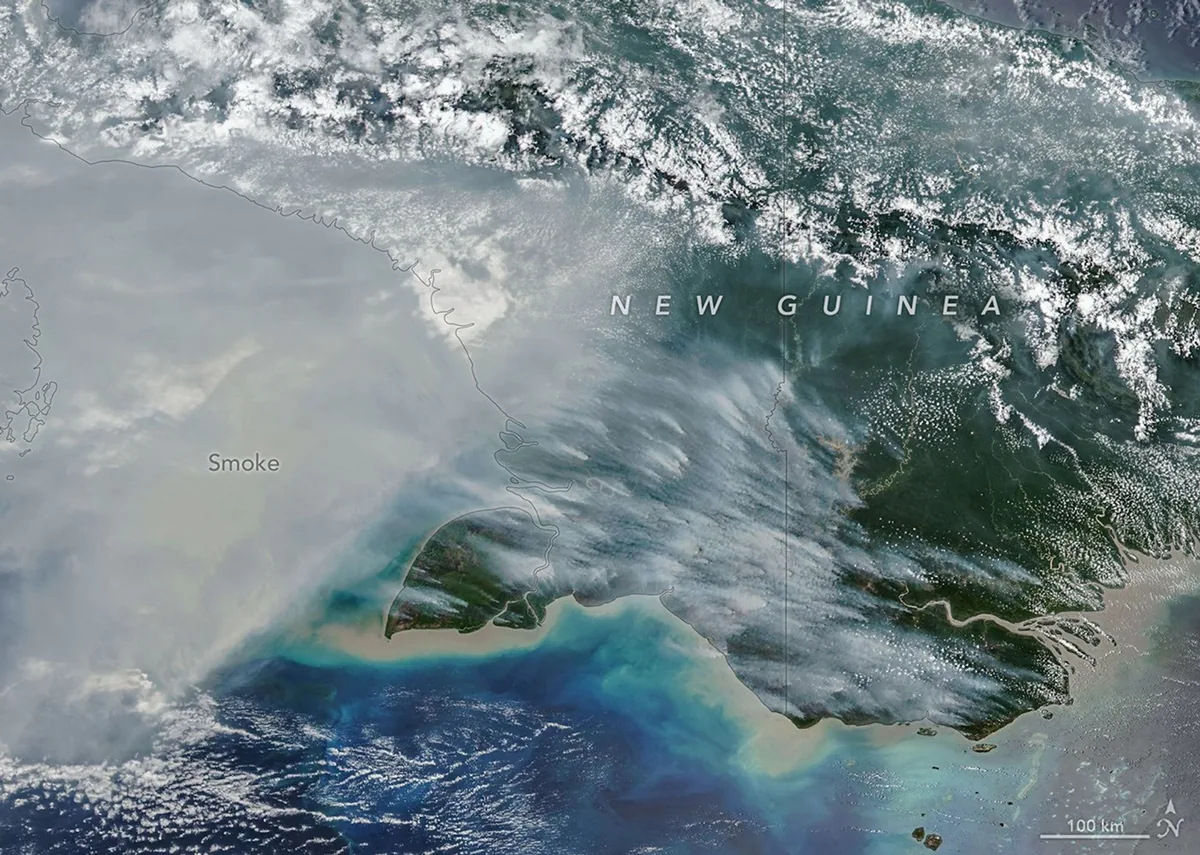
NASA Observations Reveal Surge in Fire Activity
Environmental satellite tracking conducted by NASA has documented an alarming surge in fire activity and related atmospheric emissions across the island of New Guinea. Orbital monitoring indicates that emissions originating from both the eastern and western halves of the island have reached unusually elevated thresholds, signaling widespread environmental distress.
Drought Conditions Accelerate Fire Spread
Severe drought conditions across the region have stripped the landscape of critical moisture, leaving vegetation highly susceptible to ignition. Human-set fires, originally ignited on dry terrain, have managed to spread rapidly and uncontrollably across the parched environment. The combination of intense arid ground conditions and anthropogenic ignitions has fueled large-scale blazes that continue to consume substantial territory.
Atmospheric Impact and Environmental Monitoring
The extensive burning on both sides of the island is releasing massive plumes of smoke and carbon compounds into the troposphere, altering local air quality and posing a threat to unique ecosystems. Atmospheric researchers continue to utilize remote sensing assets to track the dispersion of these unusually high emissions and evaluate their broader implications for regional weather patterns and the planetary carbon cycle.


Comments
Loading comments...