Human Impact on Continental Water Distribution
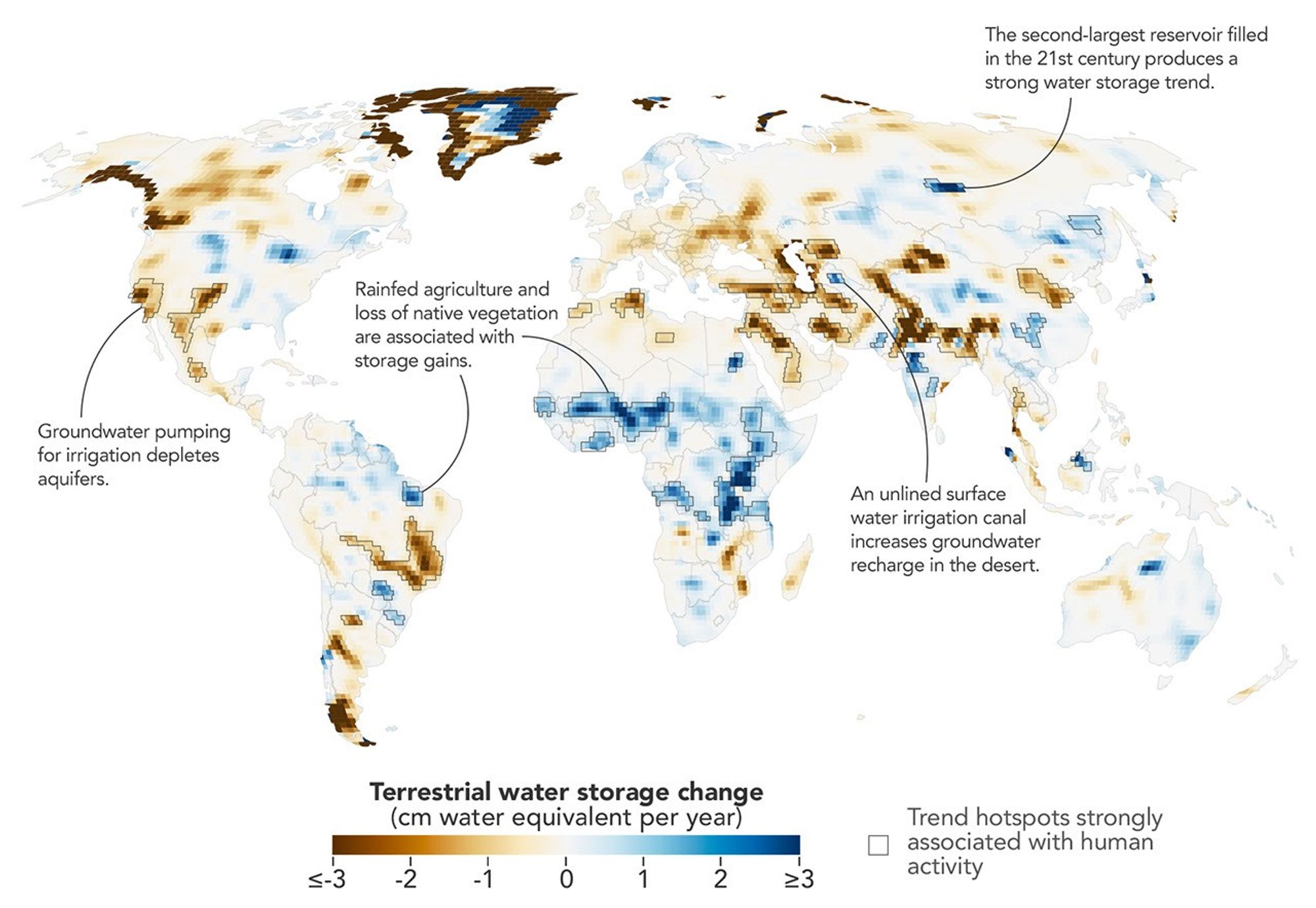
While Earth's hydrological cycle operated under the balance of natural climate mechanisms for millennia, human activities have emerged as a dominant driver in the modern era. A new study shared by NASA brings into sharper focus how human actions have become deeply intertwined with the distribution of water across the continents. The research demonstrates that anthropogenic influences are now at the very core of shifts observed in continental water storage and mobility.
Observational Insights and Hydrological Shifts
The findings presented by researchers establish that patterns of continental water flow and retention have diverged beyond regular natural seasonal variations. Hydrological data tracked across continental landmasses illustrate how agricultural usage, urban expansion, and industrial water demand have fundamentally altered water cycle characteristics. These distinct footprints reflect a profound human-driven restructuring of global terrestrial water availability.
Planetary Implications and Future Modeling
The scientific implications of the study indicate that Earth's water cycle can no longer be modeled purely on natural atmospheric and geological dynamics alone. Incorporating the direct human footprint into planetary-scale models is becoming essential for understanding global climate patterns. Researchers emphasize that tracking these continental shifts will be crucial for refining future observational programs and long-term freshwater resource assessments.


Comments
Loading comments...