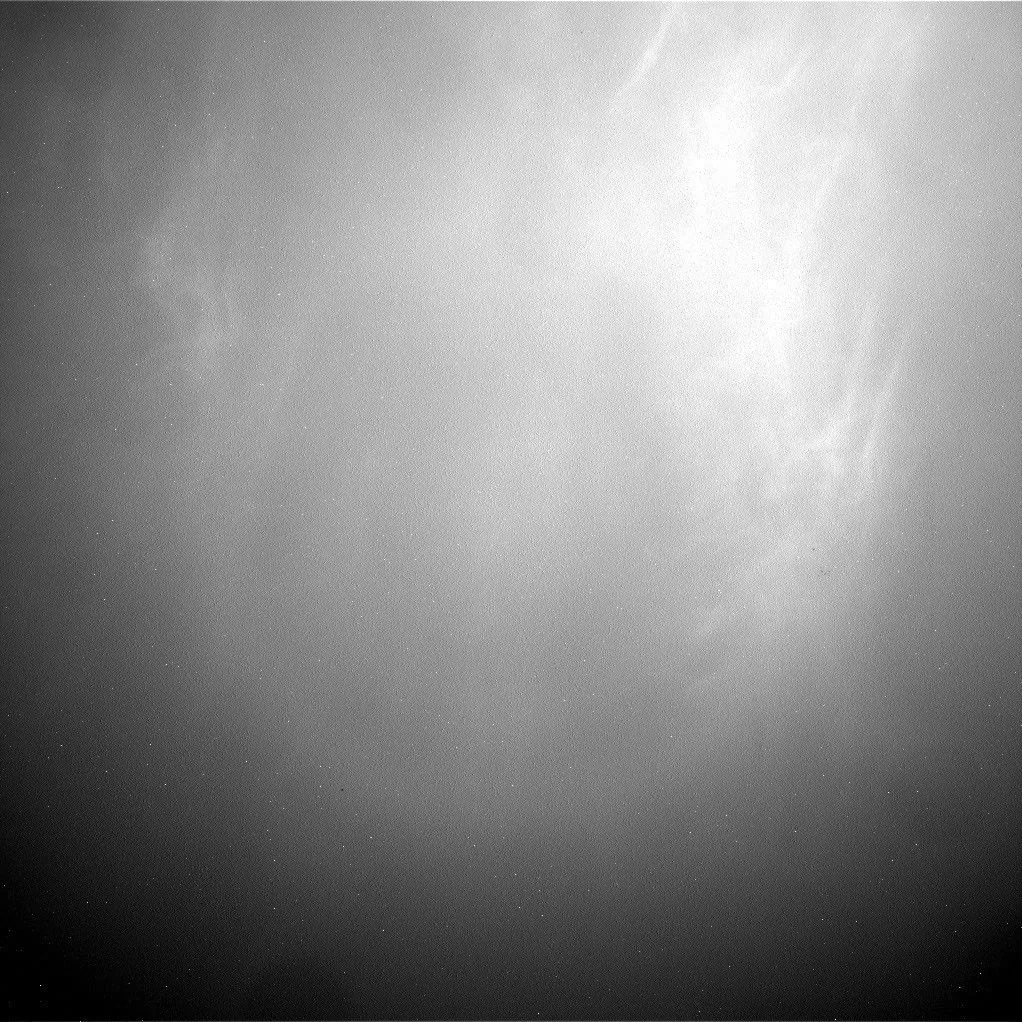
Marking a New Year in Gale Crater
NASA's Curiosity rover is turning its gaze upward to monitor the Martian sky across Sols 5036 to 5042. According to mission planning notes written by atmospheric scientist Alex Innanen of York University, coordinated on Earth planning date Friday, October 9, 2026, the Red Planet has officially entered a New Mars Year. This calendar milestone is established at the vernal equinox, which marks the start of spring in the northern hemisphere.
While continuing its traverse across Gale Crater, Curiosity provides consistent in-situ environmental observations. The arrival of the vernal equinox represents a transitional period characterized by shifting thermal gradients, changes in atmospheric pressure, and renewed cloud development across various altitudes of the Martian sky.
Tracking Atmospheric Patterns via Solar Longitude
To accurately monitor seasonal progression on Mars, atmospheric scientists keep track of the orbital cycle by counting degrees of solar longitude. This standard astronomical metric measures the position of Mars relative to the Sun, establishing a rigorous temporal framework that enables researchers to correlate cloud activity and pressure fluctuations across successive Martian years.
During Sols 5036 to 5042, the rover's scientific activities emphasize watching clouds drift overhead. By utilizing its navigation and science cameras to record cloud movement, opacity, and drift rates, Curiosity helps determine the microphysical characteristics of ice aerosols suspended in the tenuous carbon dioxide atmosphere.
Implications for Understanding the Martian Climate
Long-term atmospheric monitoring by rovers on the surface is essential for decoding how the Martian climate evolved from a warmer, water-bearing environment into the arid world observed today. Systematic seasonal tracking helps map volatile transport between the polar caps and equatorial latitudes, as well as the precursors to regional dust events.
The cloud observations conducted during this transition into a New Mars Year refine global climate circulation models. These ground-truth datasets are vital for refining global circulation models and will aid in planning future robotic and crewed exploration missions to the Red Planet.
Comments
Loading comments...