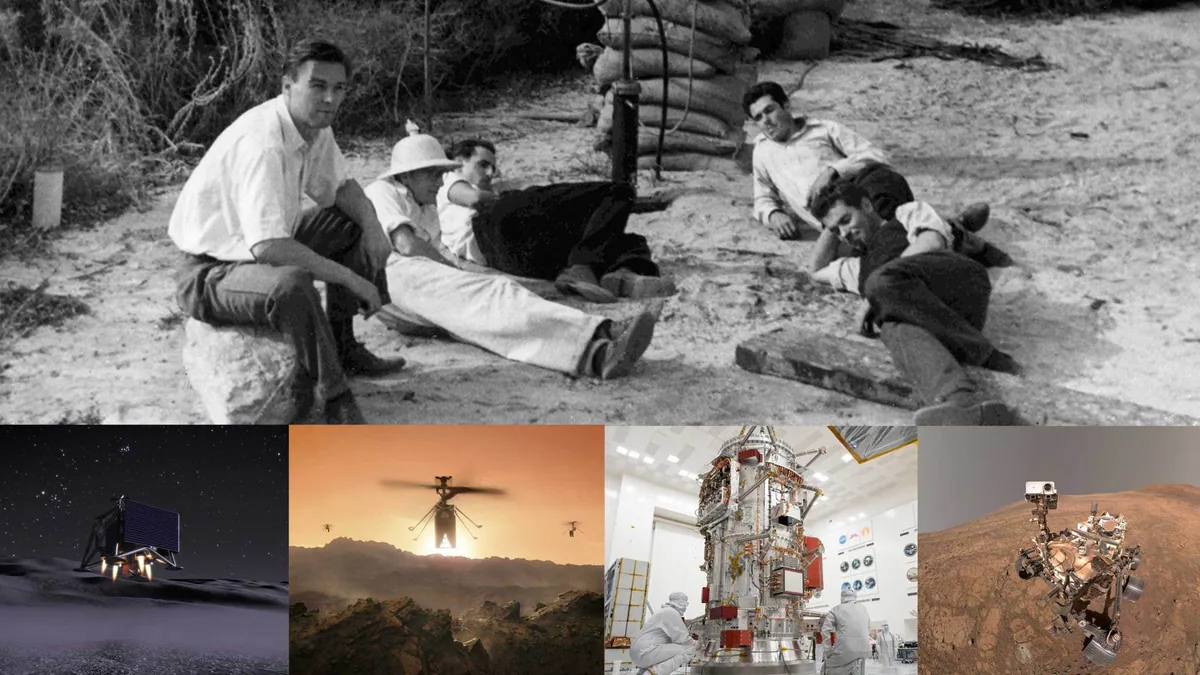
From Pasadena Rocket Tests to a World-Class Space Center
The Jet Propulsion Laboratory (JPL) began on October 31, 1936, when a group of Caltech graduate students and enthusiasts conducted initial rocket-propulsion tests in Pasadena's Arroyo Seco. Today, managed by Caltech for NASA, the laboratory celebrates ninety years of pioneering achievements that have redefined planetary exploration and deep-space missions.
Advanced Robotics and Aerial Exploration Concepts
Throughout its history, JPL has spearheaded breakthroughs in robotic space systems and autonomous technology. From operating the first Mars helicopter to designing future lunar drones, the laboratory continues to develop novel exploration vehicles. These engineering feats rely on rigorous testing and measurement to withstand harsh off-world environments.
Scientific Significance and the Next Century of Exploration
Looking ahead to its next 90 years, JPL is formulating ambitious concepts including interstellar probes and autonomous planetary explorers. These forward-looking projects aim to expand humanity's reach across the Solar System and beyond, contributing fundamental insights to astrophysics and space exploration models.
Comments
Loading comments...