Background of the Discovery and Research Team
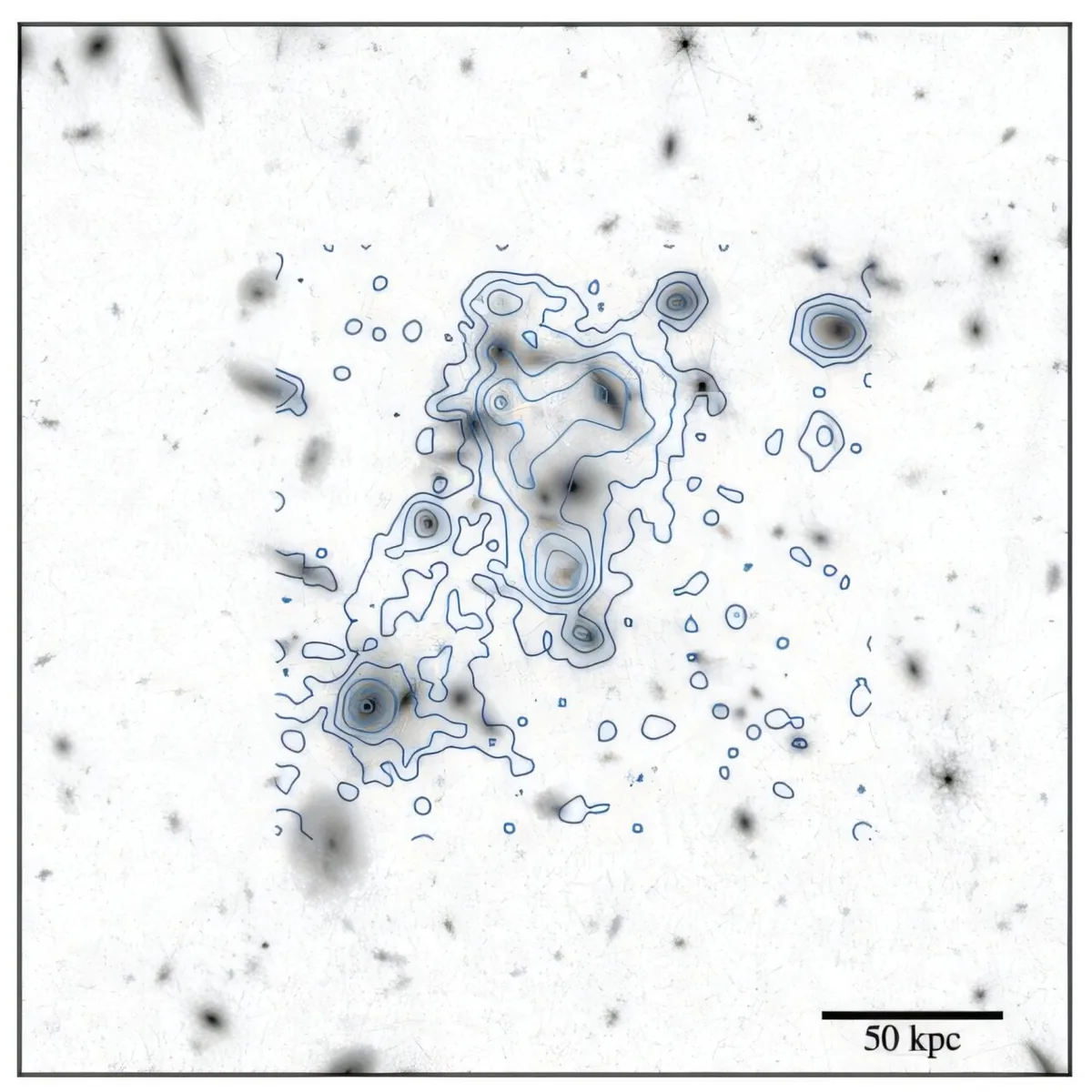
An international team of astronomers, led by Jonathan Freundlich from the Astronomical Observatory of the University of Strasbourg, has uncovered how dense cosmic environments shape the structure and evolution of galaxies. The study focused on a galaxy group located 7 billion light-years away from Earth, dating back to a key period in cosmic history. The team's compelling findings have been published in the prestigious journal Astronomy & Astrophysics.
Gas reservoirs play a vital role in the evolutionary path of galaxies. As the primary fuel for star formation, cold molecular gas allows galaxies to stay active and produce new generations of stars. However, residing in an isolated environment versus being part of a dense galaxy group entails dramatically different physical conditions. The research team has provided one of the clearest direct demonstrations of how cosmic environments drain these essential gas stashes.
Molecular Gas Mapping and Observational Details
The researchers mapped the molecular gas distribution within galaxies belonging to the group 7 billion light-years away with high spatial and spectral precision. Detailed measurements revealed that galaxies within this dense group possess severely depleted molecular gas contents. On average, the gas reservoirs of galaxies in this group were reduced by more than half compared to similar isolated galaxies in the field.
The high galaxy density within the cosmic group intensifies gravitational interactions and hydrodynamic friction with the intracluster medium. As galaxies move through the dense surrounding medium, environmental interactions pull molecular gas away from their disks. This relentless pressure strips galaxies of their star-forming fuel and scatters it into intergalactic space.
Scientific Significance for Galaxy Evolution
This study offers crucial insights into why galaxies age and eventually stop forming stars. Deprived of their molecular gas fuel, galaxies lose the ability to forge new stars, transitioning over cosmic time into passive systems. Observing such pronounced gas depletion in a group 7 billion light-years away confirms key theoretical predictions about galaxy evolution in dense environments.
Following these results, astronomers plan to utilize next-generation observatories and telescopes to observe similar cosmic groups across various wavelengths. These upcoming studies will help map the intricate interactions between galaxies and their environments, clarifying how cosmic surroundings have driven galaxy transformations throughout the history of the universe.
Comments
Loading comments...