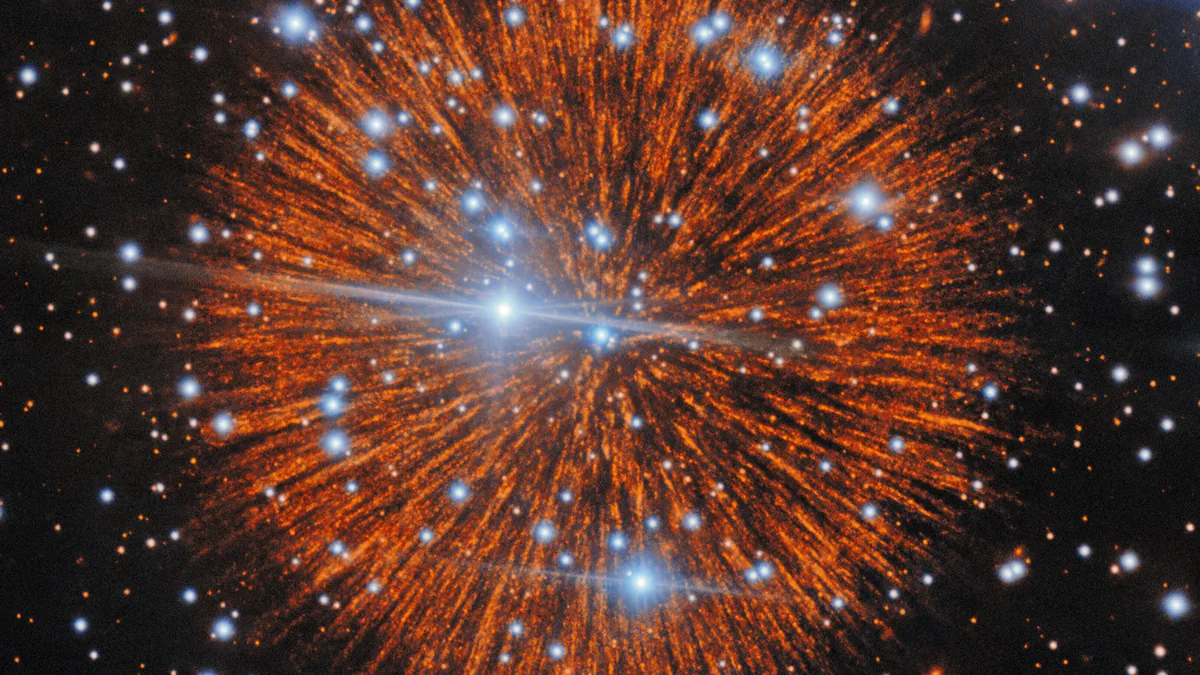
A Historical Supernova Echoing Through Time
Astronomers are continuing to uncover the secrets of a striking celestial relic produced by a supernova that was witnessed and recorded by human skywatchers roughly 850 years ago. Known for its distinct shape resembling a cosmic 'string of pearls,' this unique structure represents one of the most intriguing remnants of stellar death observed in the nearby universe.
Centuries after the initial cataclysmic detonation, the remnant's glowing shell continues its outward march into space. Modern scientific investigations are taking advantage of cutting-edge astronomical instruments to probe the structure's intricate geometry and decode the dynamics that shaped this rare cosmic tapestry.
The Bizarre Zombie Star at the Epicenter
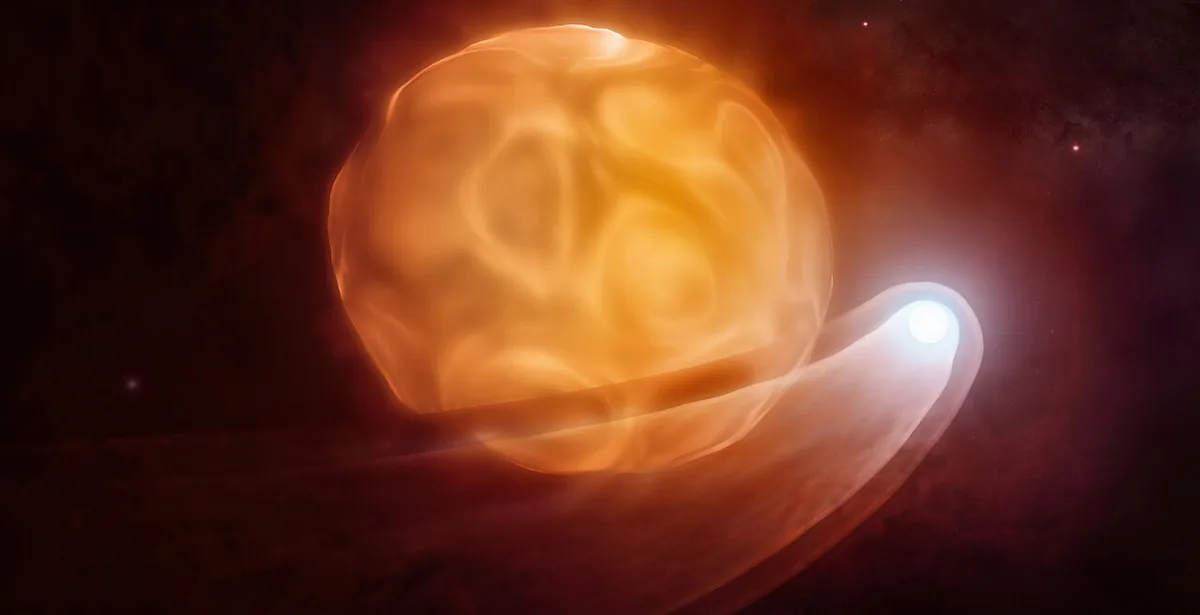
The defining marvel of this relic lies at its core: an enigmatic celestial object astronomers refer to as a 'zombie star.' While standard supernovae typically obliterate their progenitor completely or leave behind a dense neutron star or black hole, this system features a surviving stellar remnant that has defied total destruction.
Surrounding this survivor is the 'string of pearls,' a sequence of luminous, compact clumps formed as blast shockwaves collided with pre-existing material shed by the star prior to its detonation. The zombie star continues to interact with this expanding debris field, energizing the surrounding structure and offering a rare glimpse into the aftermath of incomplete stellar detonations.
Challenging the Physics of Stellar Demise
The study of this 850-year-old remnant is prompting researchers to refine established astrophysical models concerning thermonuclear and core-collapse supernovae. Understanding how a star can survive such a devastating blast and persist in a transformed, zombie-like state provides vital constraints on the mechanics of catastrophic stellar disruptions.
Astronomers anticipate that further multi-wavelength observations will map the precise chemical composition and expansion velocity of the pearls. As research deepens, this centuries-old cosmic remnant promises to reshape our understanding of how massive stars end their lives and disperse matter back into the cosmos.
Comments
Loading comments...