Record-Breaking Low-Frequency Sky View with LOFAR
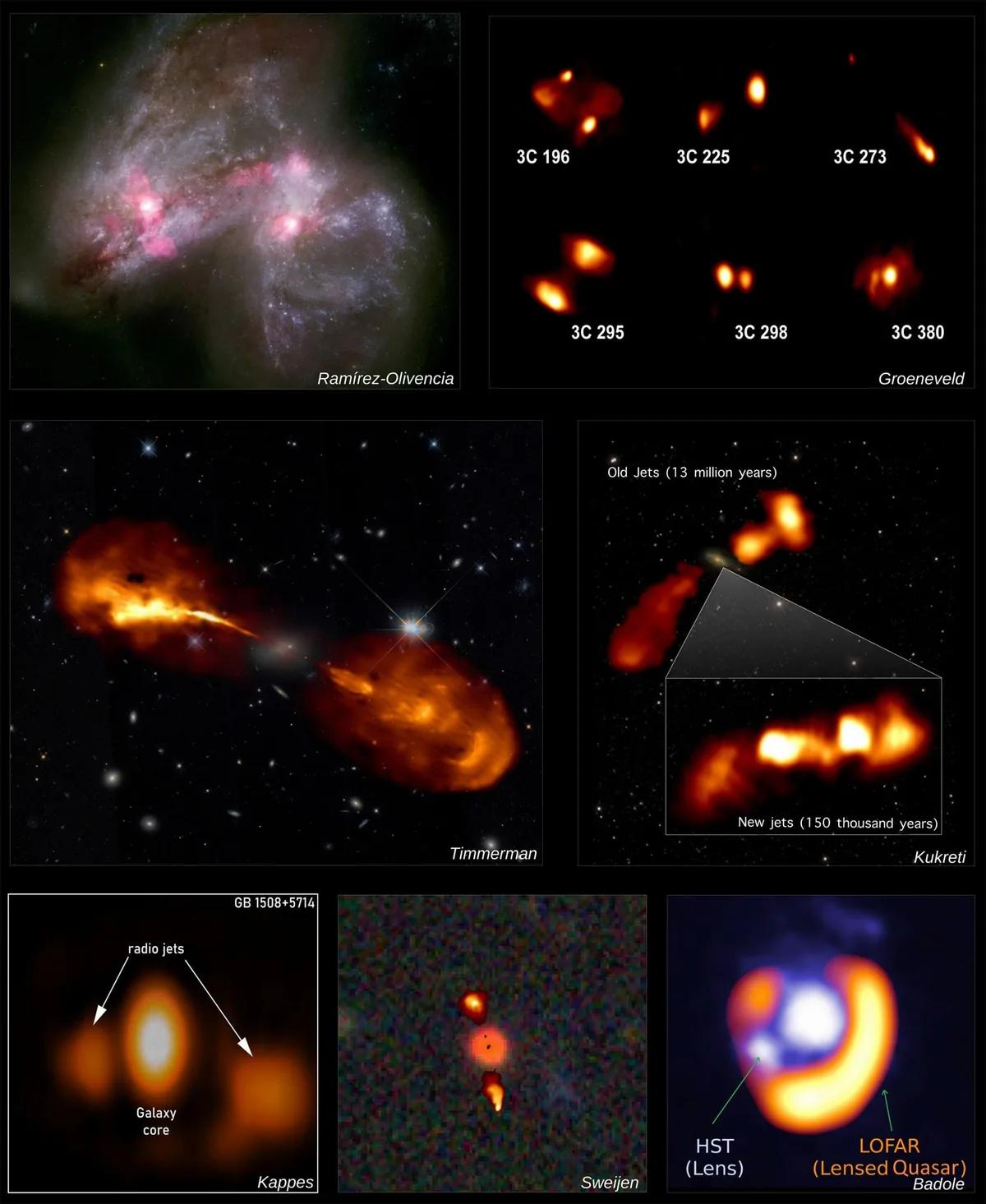
An international team of astronomers led by Leiden University has achieved a major observational breakthrough using the Low Frequency Array (LOFAR). The team succeeded in producing the sharpest and most sensitive radio view of the sky ever recorded at low radio frequencies.
Utilizing LOFAR's distributed antenna network, the researchers achieved unprecedented resolution and sensitivity, unearthing faint radio sources that were previously lost within background noise.
Technical Prowess and Unmatched Sensitivity
Creating this deep-sky radio image required advanced interferometric processing to overcome ionospheric distortions inherent to low-frequency observations. By processing massive amounts of interferometric data, the team pushed the observational limits of radio astronomy.
The resulting map reveals fine-scale cosmic features and extremely faint radio emission signatures, providing an extraordinarily detailed catalog of low-frequency radio sources across the target region.
Scientific Implications for Astrophysical Models
Observations at low radio frequencies are vital for probing synchrotron radiation, tracing cosmic magnetic fields, and studying the evolution of distant galaxies and relativistic particle jets. LOFAR's record-setting dataset offers astronomers unprecedented insight into high-energy astrophysical environments.
This unprecedented depth and clarity establish a new benchmark for low-frequency sky surveys and will guide upcoming deep cosmological investigations.
Comments
Loading comments...