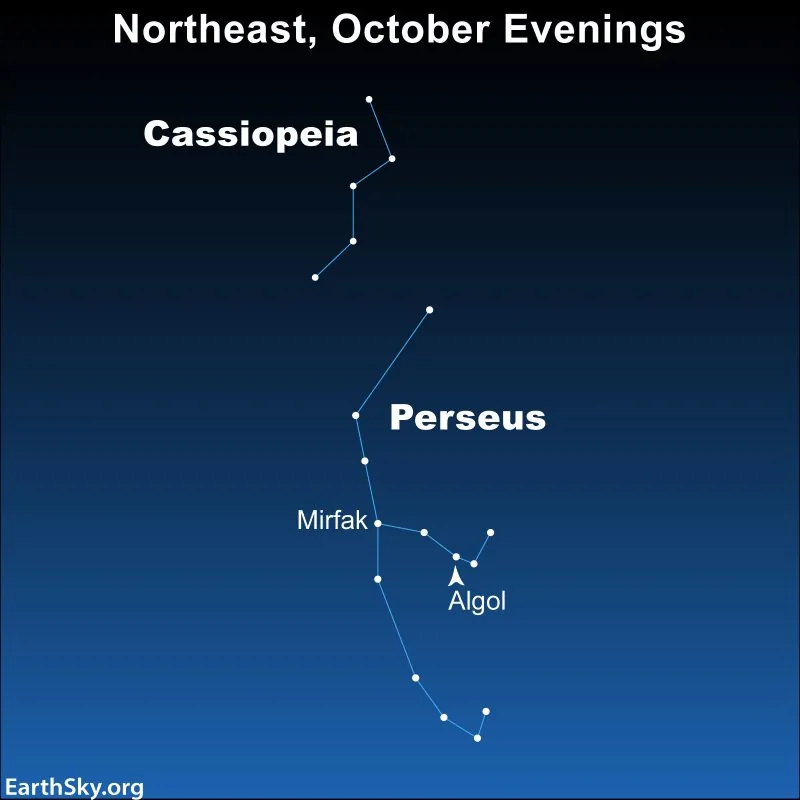
Two Neighboring Constellations in the Autumn Sky
With the arrival of the autumn months, familiar stellar patterns begin to rise above the horizon for northern hemisphere skywatchers. According to celestial guides and observing reports, two of the most notable neighboring constellations of autumn and winter evenings are Cassiopeia and Perseus. Observers looking toward the northern and northeastern skies during nighttime hours have the opportunity to view these two prominent stellar groupings together across the celestial vault.
Sky Guide: Finding Perseus via the 'W' Shape
In sky surveys, the constellation Cassiopeia acts as an intuitive celestial landmark thanks to its easily recognizable arrangement of bright stars. Depending on its orientation in the sky, this star group forms a distinctive 'W' or 'M' pattern that can be distinguished clearly even with the naked eye. Astronomy enthusiasts seeking to identify its fainter neighbor, Perseus, utilize this prominent Cassiopeia formation as a direct directional baseline to trace and locate the dimmer constellation with ease.
Significance and Guidance for Stargazers
The positioning of these two constellations across autumn nights provides an excellent starting point for amateur observers eager to navigate the nocturnal sky under low light pollution. Using a prominent and easily identifiable star formation to pinpoint fainter nearby patterns remains one of the fundamental practices in celestial mapping. Thanks to the orientation offered by Cassiopeia, exploring the surrounding Perseus region gives observers an accessible way to study seasonal constellations throughout autumn and winter.
Comments
Loading comments...