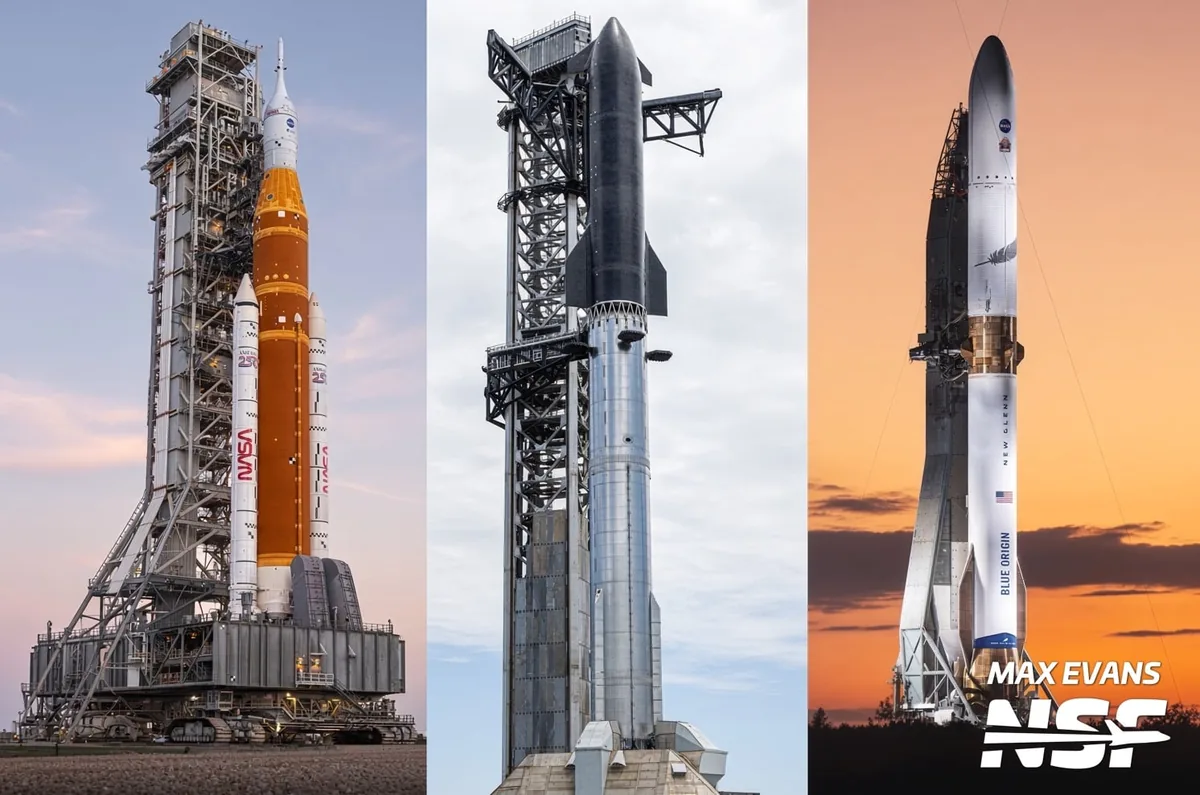
Refining the Architecture for Artemis III
NASA Administrator Jared Isaacman has addressed the operational architecture, launch sequences, and contingency frameworks planned for the historic Artemis III mission. The statements outline a meticulous verification pathway aimed at ensuring crew safety ahead of lunar landing operations.
As NASA prepares to return astronauts to the lunar environment, Isaacman highlighted the procedural steps required across a multi-launch framework, establishing baseline criteria for mission readiness and system certification.
Multi-Launch Sequence and Commercial Priorities
A central pillar of the outlined strategy involves a multi-launch checkout sequence designed to validate complex orbital rendezvous and hardware integration before crew departure. Isaacman specifically noted the strategic emphasis on commercial partnerships, including the role and prioritization of Blue Origin within the human landing system ecosystem.
The flight concept demands extensive in-space checks, ranging from cryogenic propellant transfer to autonomous rendezvous systems in low Earth orbit. By establishing strict checkout gates across sequential launches, the agency aims to mitigate cumulative mission risks prior to translunar injection.
Strategic Path to the Lunar South Pole
The operational framework for Artemis III carries profound implications for the long-term sustainability of deep space exploration. Successfully deploying an interdependent multi-launch architecture ensures that lunar landings are not isolated events, but repeatable operational campaigns.
NASA's focus on contingency readiness and diversified landing hardware guarantees that schedule shifts or technical anomalies in one branch will not compromise the overarching lunar exploration initiative, securing humanity's scientific footprint on the lunar surface.



Comments
Loading comments...