The Prevailing Model of Lunar Origin
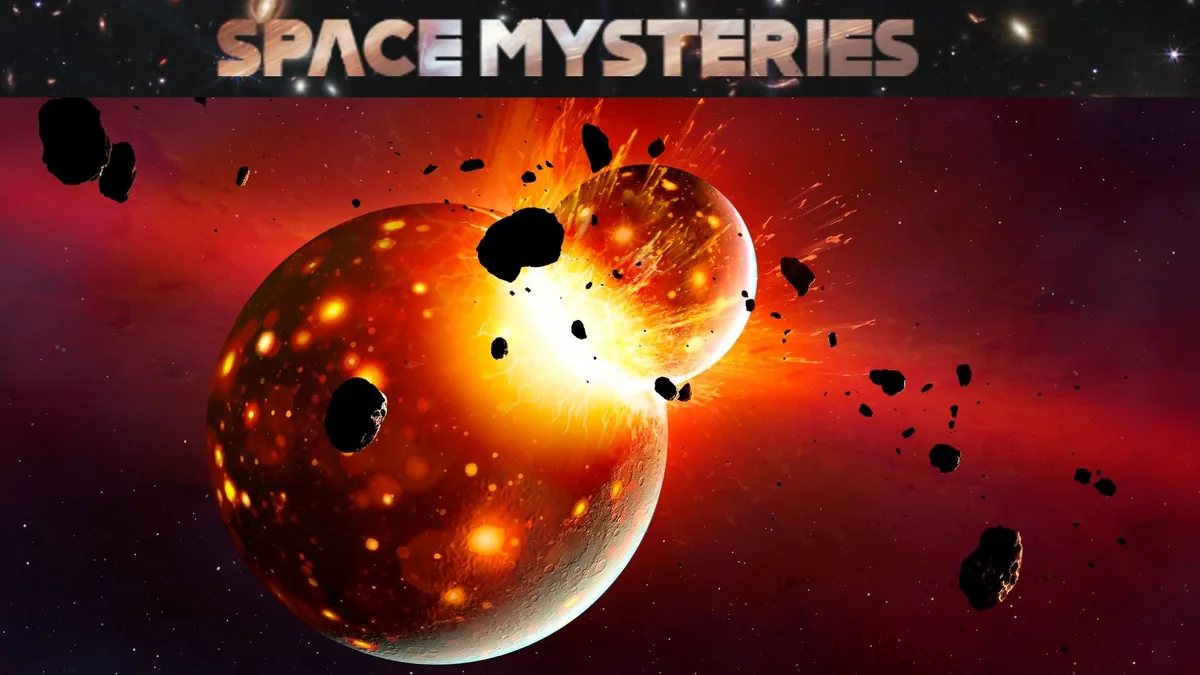
How the Moon came to exist alongside Earth remains one of the foundational questions in planetary science. The leading explanation, known as the giant-impact hypothesis, posits that Earth's primary natural satellite is the direct result of a catastrophic planetary collision during the violent formative era of the Solar System.
The Cataclysmic Encounter with Theia
According to this hypothesis, the early proto-Earth collided with a hypothetical, Mars-sized protoplanet designated by astronomers as Theia. The monumental collision generated immense heat and kinetic energy, obliterating Theia and blasting a colossal plume of vaporized and molten planetary debris into orbit around the surviving Earth.
Implications for Planetary Science and Future Models
Over time, the orbiting ring of debris coalesced under its own gravity to form the Moon. Researchers continue to test this framework by comparing the isotopic composition of lunar rock samples with sophisticated supercomputer impact simulations, aiming to resolve key questions about Theia's exact trajectory, composition, and lasting signature inside Earth's mantle.

Comments
Loading comments...