Early Winter Activity in California's Mountains
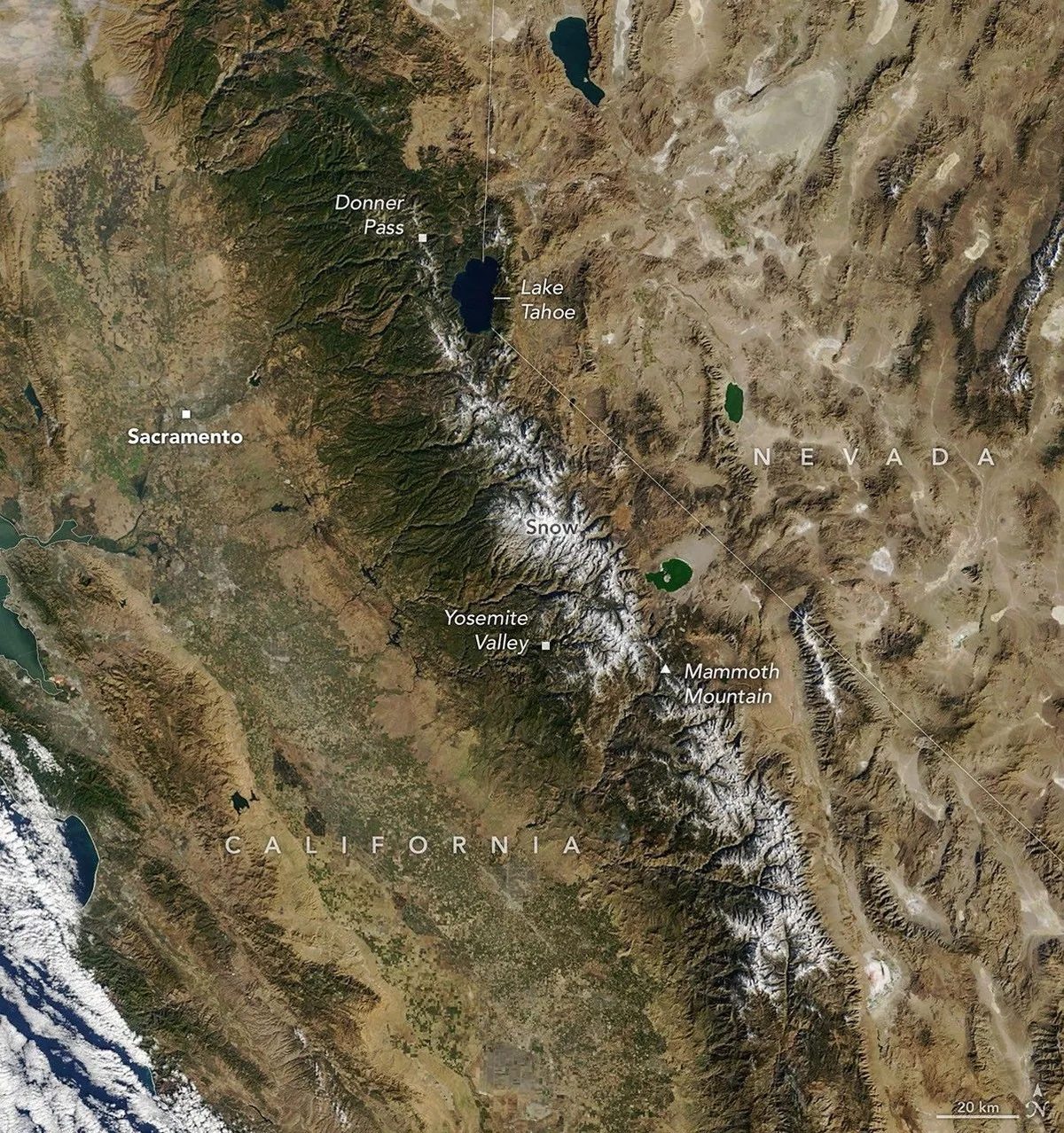
NASA Earth observation data highlights an early start to the winter snow season across California's mountainous terrain. In mid-November 2026, a widespread and early-season snowstorm swept across the region, blanketing the mountain ranges in a striking layer of white. Captured through orbital observations, this weather event marks a significant opening chapter for the region's seasonal climate cycle.
NASA’s Earth-observing systems regularly monitor planetary snow cover and atmospheric circulation patterns to track ongoing environmental shifts. The broad storm system altered surface conditions at high altitudes across California within a short window, signaling a rapid acceleration of winter storm activity for the season.
Observation and Spatial Extent of the Storm
Advanced spaceborne sensors and meteorological monitoring assets documented the spatial spread of the storm across the mountain ridges. Occurring in the middle of November, the storm blanketed vast mountainous areas with an early snowpack layer. Orbital imagery clearly delineates the extensive white coverage stretching across peaks and high-elevation valleys throughout the state.
Early-season storms typically form through the convergence of atmospheric moisture streams and cold air masses. California's complex topography forces this moisture upward, producing substantial snowfall across elevated terrain. Space-based sensors allow scientists to map the precise boundaries of snow cover and record the immediate footprint left by such weather events.
Significance for Regional and Earth System Models
Mountain snowpack plays an essential role in regulating regional water systems and local climate conditions. Early-season storms establish the baseline for winter accumulation, directly influencing how seasonal snow reservoirs develop over subsequent months. Earth observations conducted from orbit provide critical reference points for understanding snow distribution and hydrological cycles.
Scientific teams will continue monitoring the evolution of mountain snowpack and seasonal weather trends over California throughout the coming winter. The mid-November 2026 storm provides valuable data for researchers studying planetary atmospheric patterns and their tangible surface impacts.
Comments
Loading comments...