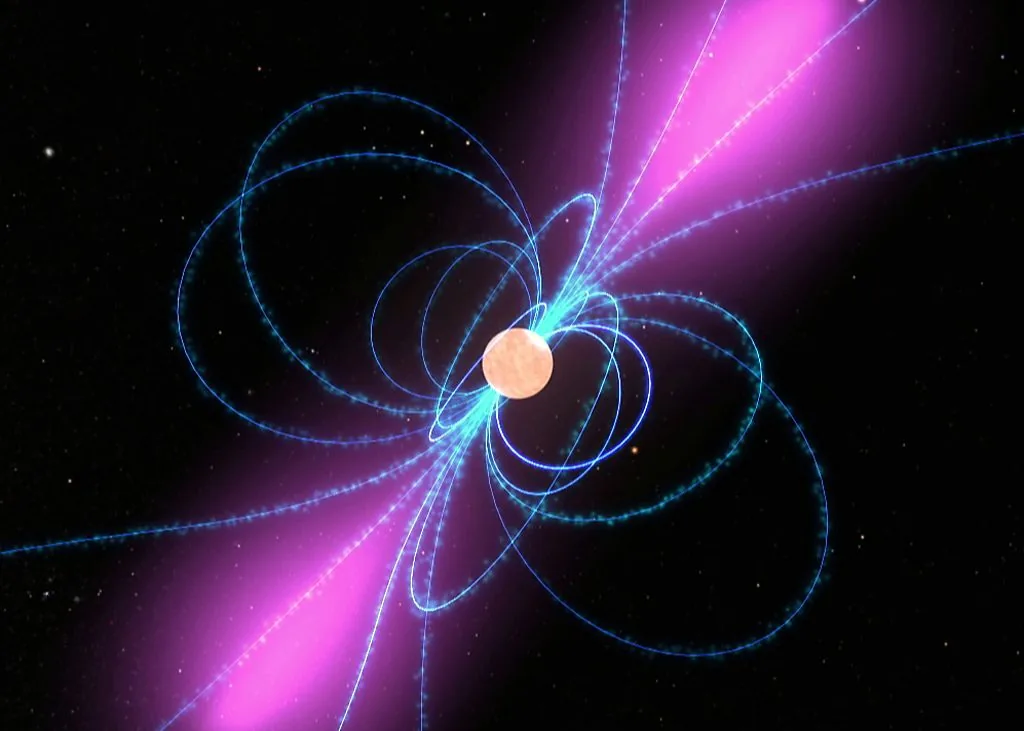
A Landmark Discovery on November 28, 1967
One of the most consequential events in radio astronomy occurred on November 28, 1967, when Jocelyn Bell and Antony Hewish detected an exceptionally periodic radio pulse. The unusually regular timing prompted the researchers to half-jokingly designate the source as Little Green Men 1 (LGM-1).
Unraveling the Regular Radio Pulses
Precise observational recordings confirmed that the pulses repeated with strict regularity. While artificial origins were briefly contemplated, further analysis established that the emissions originated from a rapidly spinning, ultra-dense compact astrophysical object, providing empirical proof for theoretical neutron stars.
Scientific Impact on Stellar Astrophysics
Later classified as a pulsar, this phenomenon transformed our comprehension of stellar evolution and extreme physics. The discovery initiated an entire branch of observational astrophysics, enabling deep exploration into strong gravitational fields, relativistic mechanics, and dense matter states.
Comments
Loading comments...