The Accretion Disk Paradox
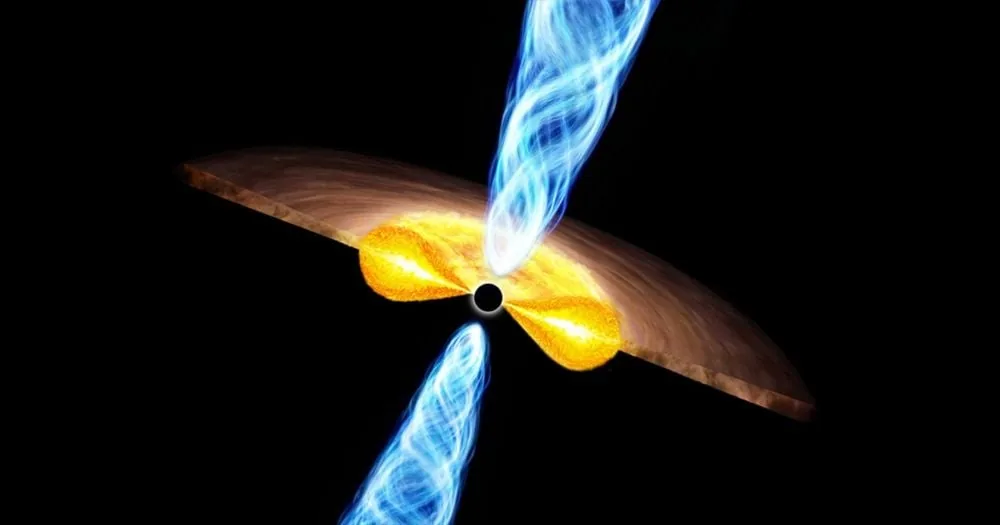
Astrophysicists have long established that relativistic jets launched by supermassive black holes are powered by thick, blisteringly hot accretion disks threaded by intense magnetic fields. Yet observations consistently revealed a theoretical paradox: several active black holes launch robust jets despite appearing to harbor thin, cold accretion disks.
Decoupling the Inflow: Hot and Cold Regimes
Groundbreaking research has resolved this cosmic puzzle by demonstrating that accretion disks can undergo radial truncation. The study reveals that the inflow segregates into two distinct zones: a cooler, geometrically thin outer disk feeding into a truncated, geometrically thick and scorching inner disk where magnetic forces efficiently drive relativistic outflows.
Implications for Galactic Evolution
This hybrid accretion model bridges a critical gap in high-energy astrophysics. By explaining how seemingly quiescent disk geometries can generate explosive outflows, the findings refine current paradigms regarding supermassive black hole growth and their regulatory feedback on host galaxies.
Comments
Loading comments...