A New Era of Computational Cosmology with Aurora
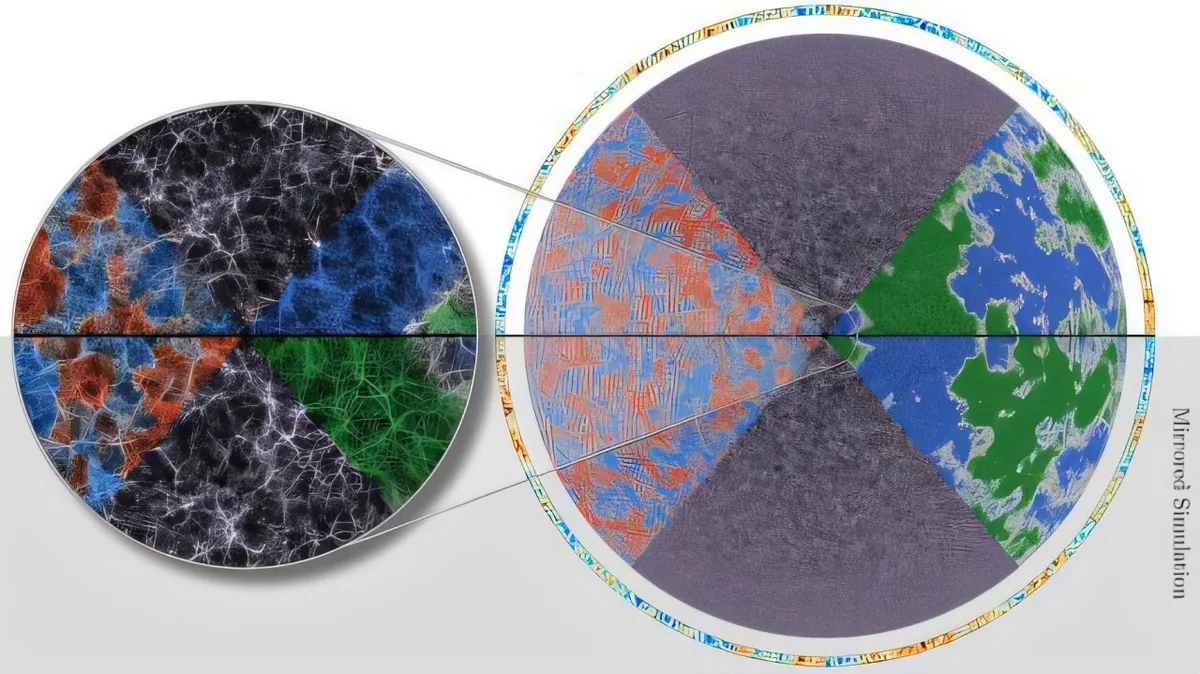
Researchers at the U.S. Department of Energy's (DOE) Argonne National Laboratory have successfully completed two of the largest cosmological simulations ever performed. Utilizing the immense processing power of the Aurora supercomputer, the team modeled the grand evolution of the universe with an unprecedented level of computational detail and scale.
Tracking 13.4 Trillion Dark Matter Particles
Each of the two completed simulations covers an immense cosmic expanse measuring 28.6 billion light-years across. Within this massive volume, scientists modeled the gravitational dynamics and clustering behavior of 13.4 trillion dark matter particles over cosmic time, delivering one of the most comprehensive digital representations of large-scale dark matter structure ever produced.
Impact on Cosmological Models and Future Missions
The resulting datasets provide an invaluable foundation for astrophysicists testing standard cosmological models and hypotheses surrounding cosmic expansion. These high-resolution simulations will serve as critical benchmarks for comparing actual galaxy distribution surveys gathered by next-generation astronomical observatories.

Comments
Loading comments...