
Olbers' Paradox and Its Historical Context
If the universe is vast and filled with countess stars, why is the night sky dark rather than ablaze with light? This question lies at the heart of Olbers' paradox, one of the most famous thought experiments in the history of astronomy and cosmology, prompting centuries of scientific investigation.
Light Travel Time and Cosmological Redshift
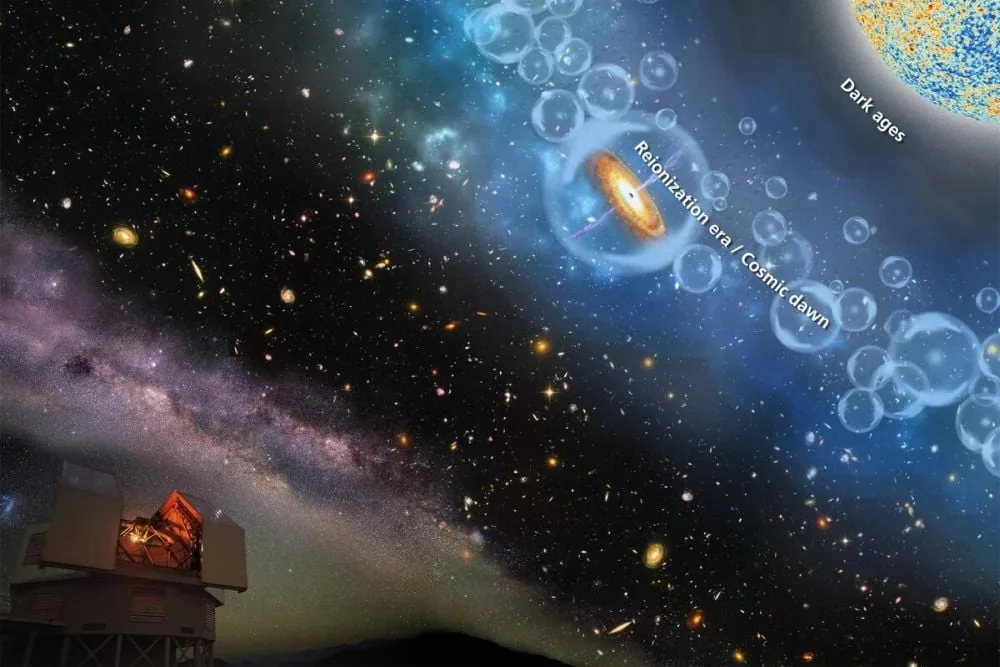
The solution to the paradox rests on the finite speed of light and the expansion of the universe. Light from distant galaxies requires time to reach Earth, limiting the observable universe. Furthermore, cosmic expansion stretches the wavelengths of light emitted by distant stars, shifting visible light into the invisible infrared spectrum.
Significance in Modern Cosmology
Resolving Olbers' paradox provides crucial evidence that the universe is neither static nor infinitely old, but rather dynamic and expanding. This fundamental concept continues to underpin modern cosmological models and our understanding of the universe's origin.
Comments
Loading comments...