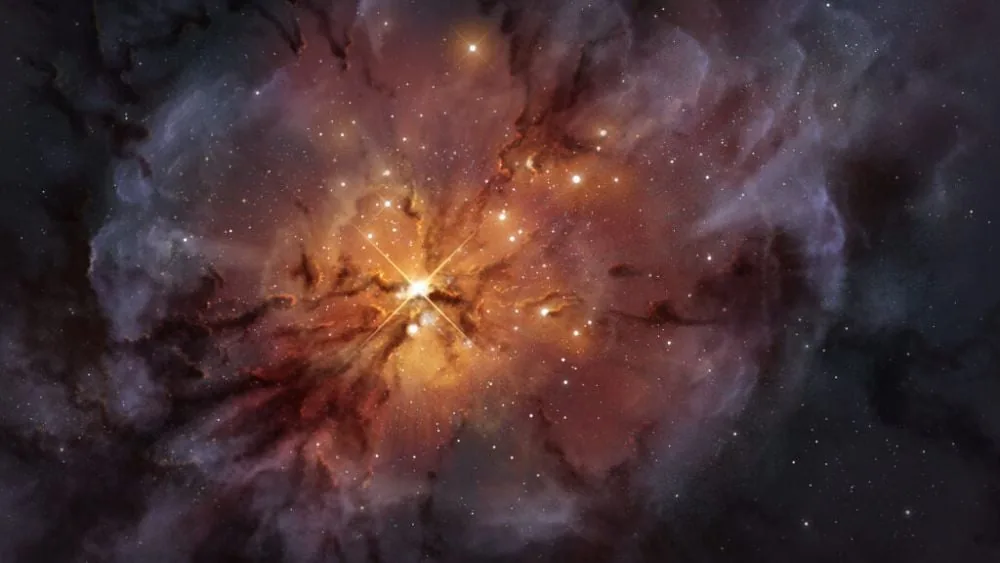
Background of the Discovery
The James Webb Space Telescope discovered an oddity in photos of the early universe: an overabundance of bright galaxies about 400 to 500 million years after the Big Bang. However, these galaxies should have been far less common so soon after the Big Bang.
Observation and Measurement Details
Researchers think that powerful ultraviolet (Lyman-alpha) radiation produced by dense clusters of young stars acted like a leaf blower, driving light-blocking gas and dust out of the galaxy and thereby making the galaxies appear brighter.
Scientific Significance of the Discovery
This discovery is an important step in understanding how the early universe formed and how galaxies evolved. Scientists can use this information to better understand galaxy formation and evolution in the early universe.
Comments
Loading comments...