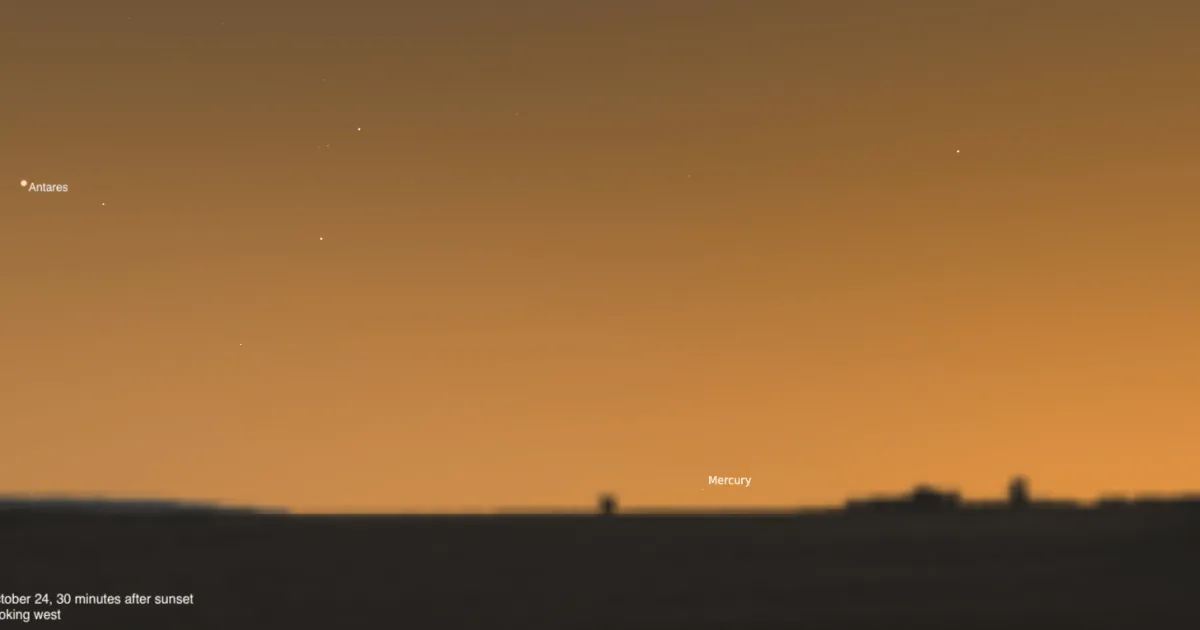
Orbital Stationarity in the Constellation Libra
Mercury, the smallest and innermost planet of our Solar System, has reached a defining moment in its apparent trajectory across the sky. According to astronomical sky-watching schedules, the swift planet settles into its stationary point within the boundaries of the constellation Libra at 8 A.M. EDT. From the vantage point of Earth, these stationary episodes mark the geometric transition phases dictated by the differing orbital speeds of inner planets relative to our own.
This stationary stance corresponds to the moment when Mercury's apparent eastward motion across the background stars slows down to an apparent halt before shifting direction. For avid skywatchers, these intervals are ideal for charting the planet's angular separation from the Sun and following its orbital cadence through the zodiacal constellations.
Viewing Conditions and the Western Horizon
Observing Mercury consistently demands precise timing due to its close proximity to the Sun. Around this stationary milestone, the diminutive planet emerges only fleetingly low on the western horizon immediately after sunset. Astronomers emphasize that a clear, unobstructed horizon is essential for catching a glimpse of the planet, advising observers to look toward the western skies as twilight fades.
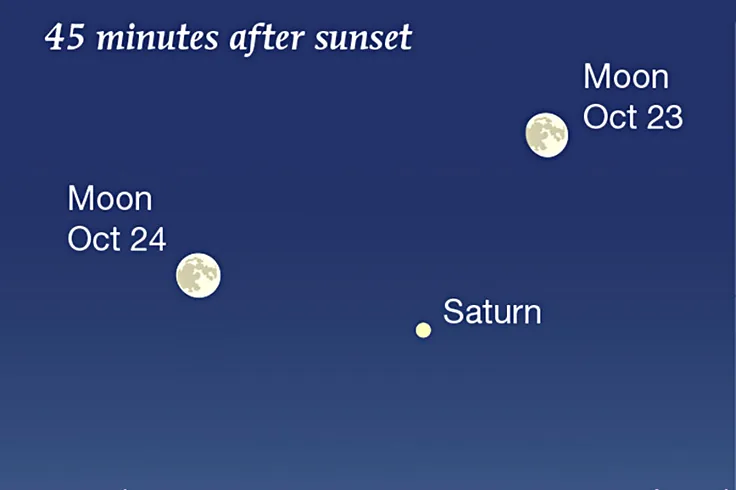
This orbital checkpoint is part of a broader week of astronomical events. Just ahead of Mercury's pause, the sky calendar also highlighted an encounter on October 23, when the distant ice giant Neptune appeared in close proximity to the Moon, providing telescope users with complementary targets across the evening sky.
Significance in Planetary Mechanics
The apparent motions of inner planets have historically provided fundamental insights into the architecture of the Solar System. The rapid movement, subsequent stationarity, and shifting visibility of Mercury stem from its compact, 88-day orbit around the Sun. Observing these transitions bridges classical celestial mechanics with hands-on skywatching.
Even though the viewing window remains brief before Mercury dips below the horizon, tracking its stationary phase offers observers a direct encounter with orbital physics in action, demonstrating the clockwork precision that governs our planetary neighborhood.
Comments
Loading comments...