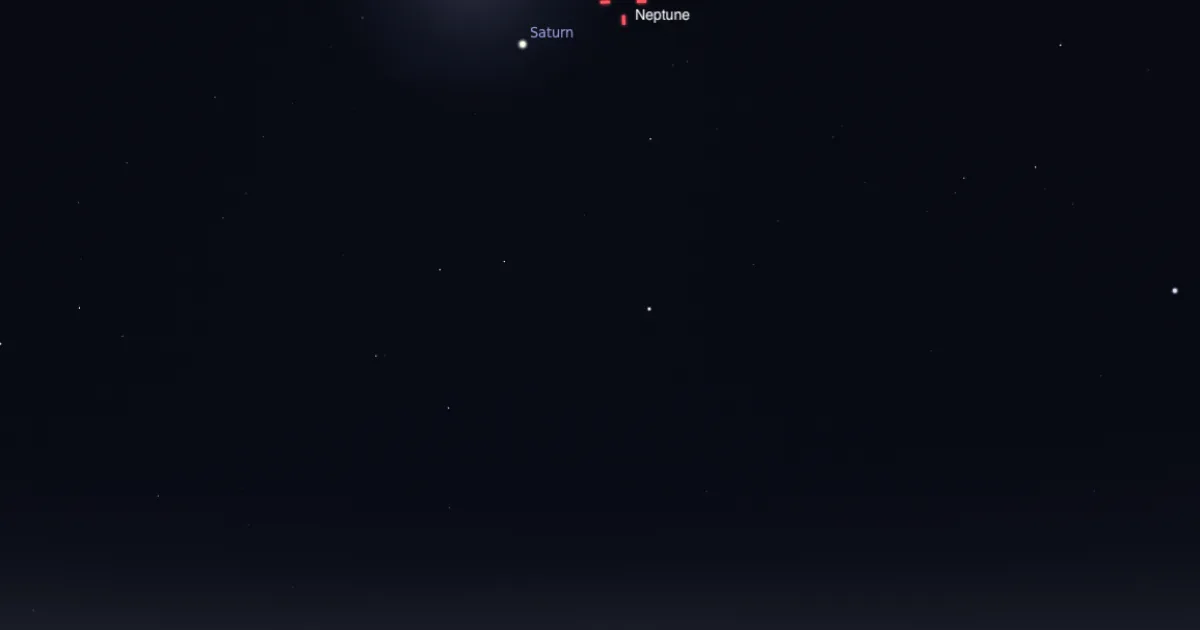
A Celestial Alignment in the Sky
As part of November's sky events, the Moon is making close passes by Neptune and Saturn, two distant planets of our solar system. This celestial alignment provides a noteworthy viewing opportunity for both amateur and professional astronomers. Following Mercury's move into Libra on November 19, the dynamics in the night sky continue with the Moon's changing position.
Observation Details and Timing
According to the schedule, the Moon first passes 5 degrees north of Neptune at 8 A.M. EST. Exactly 12 hours later, at 8 P.M. EST, Earth's natural satellite passes 7 degrees north of Saturn. This trio of celestial bodies becomes visible in the southeastern sky two hours after sunset.
Scientific Significance for Stargazers
Conjunctions and close passes like this offer great opportunities to track planetary orbital movements across the night sky. Finding faint objects such as Neptune becomes significantly easier when using the Moon as a visual reference point. Stargazers are advised to direct their attention toward the southeastern horizon.
Comments
Loading comments...