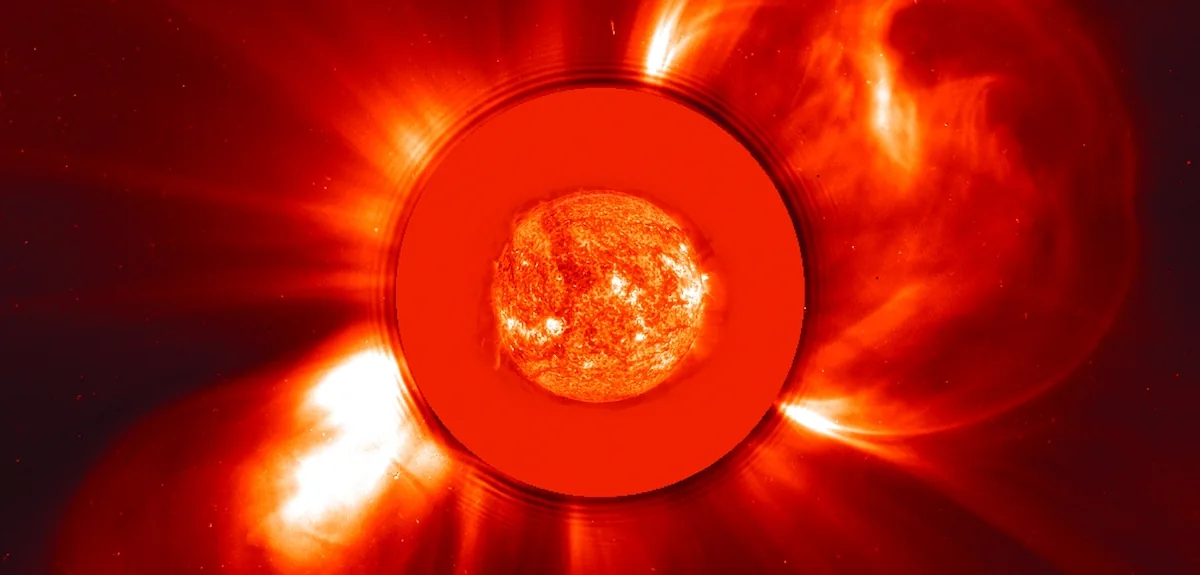
Solar Eruptions and Coronal Mass Ejections
Coronal mass ejections (CMEs) originating from the Sun's upper atmosphere are massive eruptions of plasma and magnetic fields that drive major space weather events. When these plasma clouds interact with Earth's magnetosphere, they can trigger geomagnetic storms impacting satellite operations and electrical power grids. Scientists rely on spacecraft stationed throughout the solar system to sample these eruptions and accurately calculate their speed, mass, and magnetic orientation.
Synthetic Spacecraft and Trajectory Simulations
In a new study featured in AAS Nova, researchers investigated how a spacecraft's trajectory through a CME influences the measured characteristics of the eruption. To model these interactions, scientists deployed simulated 'synthetic' spacecraft along various orbital paths through digital CME structures. The findings demonstrated that whether a spacecraft passes through the core or the outer flank of a CME dramatically alters the calculated magnetic strength and physical scale of the solar storm.
Implications for Space Weather Forecasting
These results highlight the critical necessity of accounting for orbital geometry when modeling solar eruptions and forecasting space weather hazards. Relying on single-spacecraft measurements can introduce significant observational bias into solar physics models. To overcome these limitations, future heliospheric missions may increasingly deploy multi-spacecraft constellations capable of measuring coronal mass ejections simultaneously from multiple vantage points.

Comments
Loading comments...