Surprise Discovery in Inner Galaxy Regions
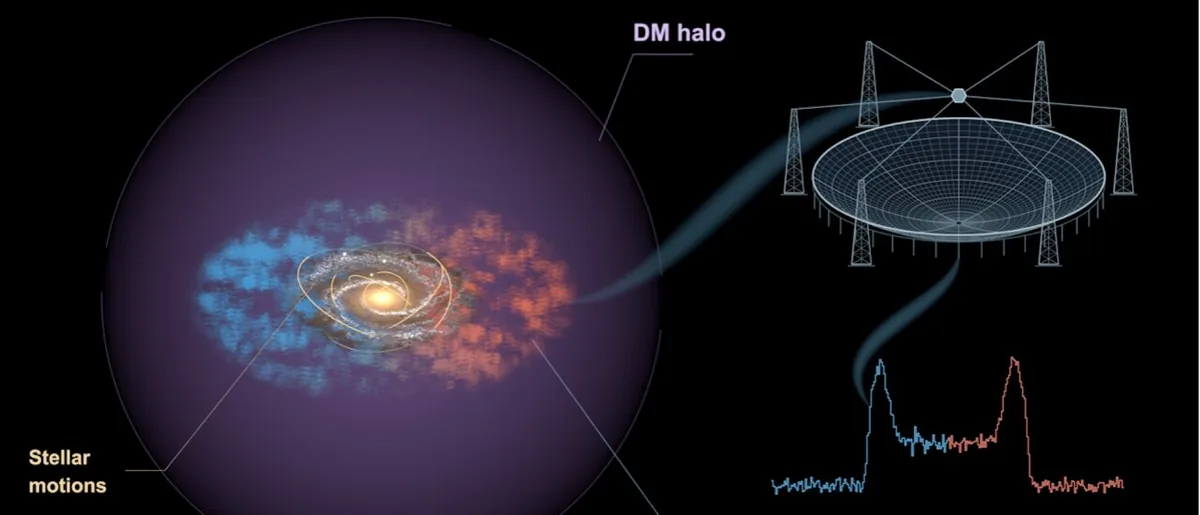
Astronomers have uncovered an unexpected feature beneath the visible stars of nearby galaxies. In a new study involving the Instituto de Astrofísica de Canarias (IAC), researchers revealed that the inner regions of galaxies contain less dark matter than predicted by some of our most advanced computer simulations. Although dark matter is invisible, its gravitational pull plays a fundamental role in governing the motions of stars and gas.
Movement Analysis of 136 Galaxies
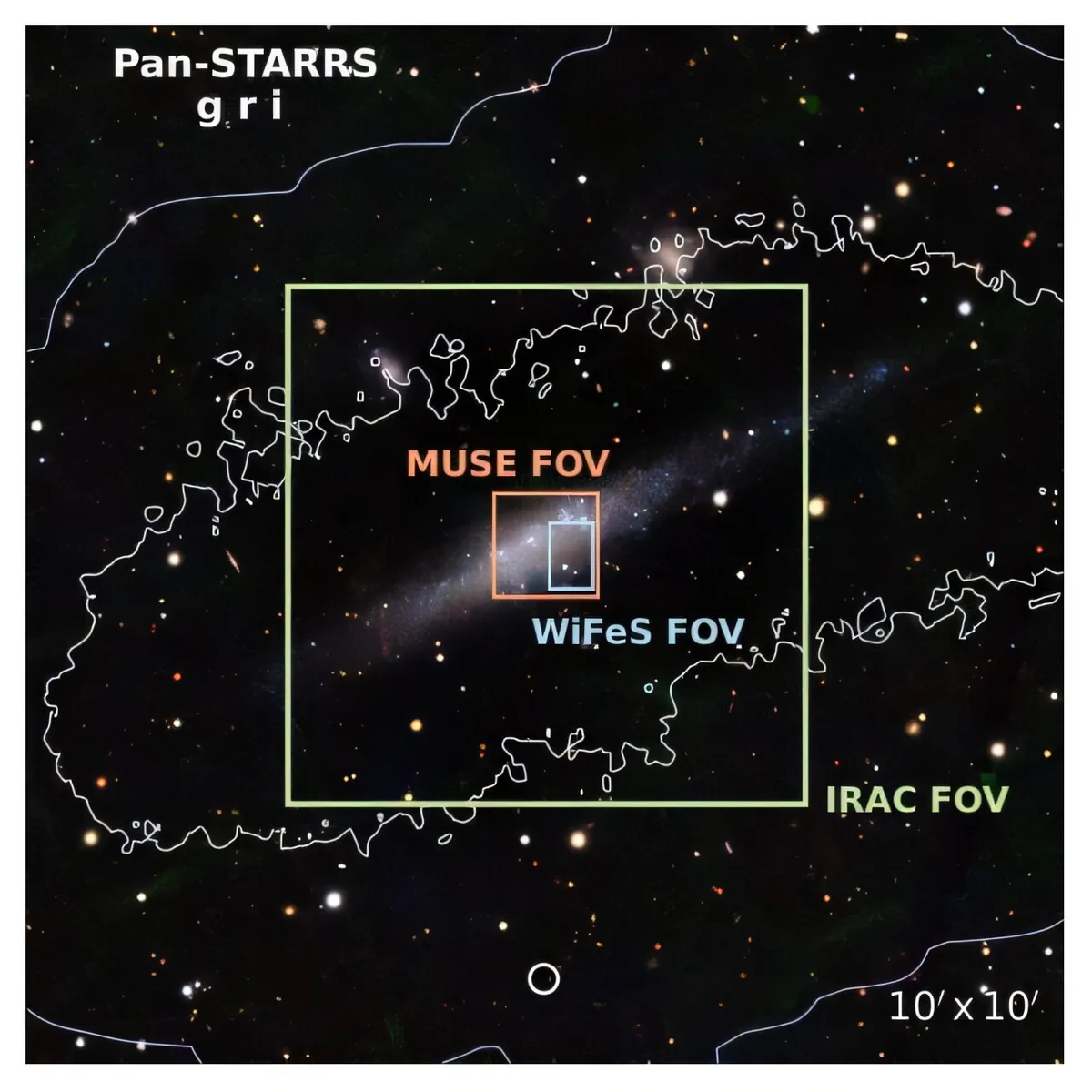
To test the simulations used to understand the universe, astronomers measured these celestial movements to reconstruct where this unseen matter resides. By analyzing a sample of 136 nearby galaxies, the team evaluated the discrepancy between physical measurements and theoretical predictions. The observational data directly challenges standard models regarding how matter is distributed within galaxy cores.
Implications for Galaxy Evolution and Cosmology
The study demonstrated that the discrepancy becomes increasingly extensive in more massive systems. This difference in dark matter concentration provides fresh clues about the complex mechanisms governing how galaxies form and evolve over cosmic time. Future research will focus on refining computer models to better reconcile these observed orbital dynamics with dark matter theory.
Comments
Loading comments...