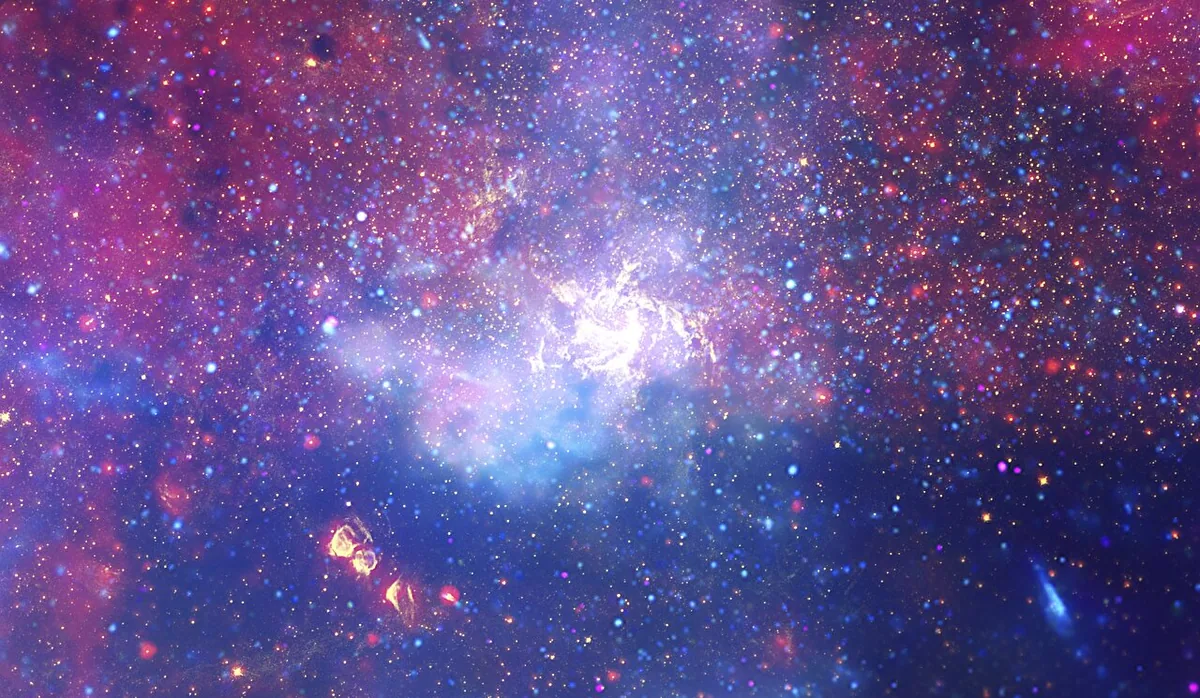
A Closer Look at the Monster in the Milky Way's Heart
At the very center of our galaxy lies Sagittarius A* (Sgr A*), a supermassive black hole dominating an environment characterized by extreme gravitational and radiation forces. Utilizing the advanced capabilities of the James Webb Space Telescope, researchers at McGill University's Trottier Space Institute have carried out an extensive investigation into the gas reservoirs circulating in the immediate vicinity of this cosmic titan, revealing crucial chemical characteristics that had long eluded astronomers.
Detecting Metal Enrichment Near the Event Horizon
The observational data gathered by the telescope revealed that the gas orbiting Sagittarius A* is exceptionally rich in metals—elements heavier than hydrogen and helium. According to the scientific team, this pronounced metal enrichment is primarily the legacy of massive progenitor stars that reached the ends of their lives and exploded in catastrophic supernovae. These violent stellar events ejected substantial amounts of newly synthesized heavy elements directly into the circum-black hole environment over extended periods.
Stellar Legacies and Galactic Evolution Models
The discovery provides critical empirical constraints on how central black holes interact with and feed upon the surrounding interstellar matter. Understanding that the accreted gas is heavily seeded with supernova ejecta helps refine galactic evolution theories and illuminates the continuous cycle of matter at the galactic core. Scientists anticipate that future high-resolution observations will further clarify the detailed distribution of these elements and their dynamical role in feeding the supermassive black hole.
Comments
Loading comments...