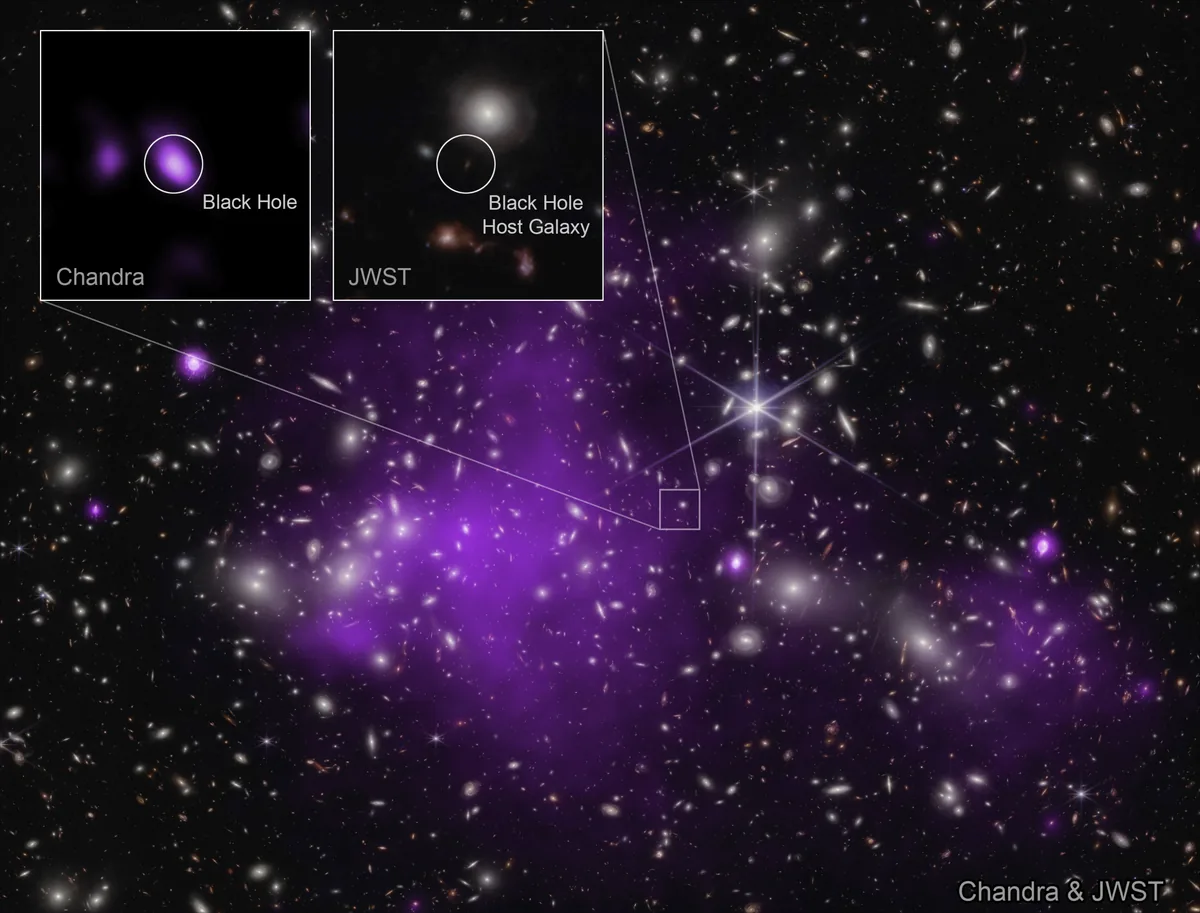
Initial Claims Regarding Galaxy UHZ1
Three years ago, galaxy UHZ1 generated significant headlines when astronomers claimed it hosted an unusually massive, heavily dust-obscured black hole formed via direct collapse. This discovery suggested the existence of outsize black holes in the early universe, pushing the limits of conventional cosmic evolution models.
Reanalysis of X-Ray and Infrared Data
A research team led by Fan Zou of the University of Michigan re-examined the target using existing X-ray datasets alongside new infrared observations. Published in The Astrophysical Journal on October 14, their analysis revealed no observational signatures of the previously reported hidden black hole activity.
Revised Classification and Theoretical Implications
The revised findings indicate that UHZ1 is likely a low-mass, metal-poor, star-forming galaxy rather than a host to an overgrown black hole. This study underscores the critical importance of rigorous multi-wavelength follow-ups when interpreting rare high-redshift phenomena in early cosmic history.
Comments
Loading comments...