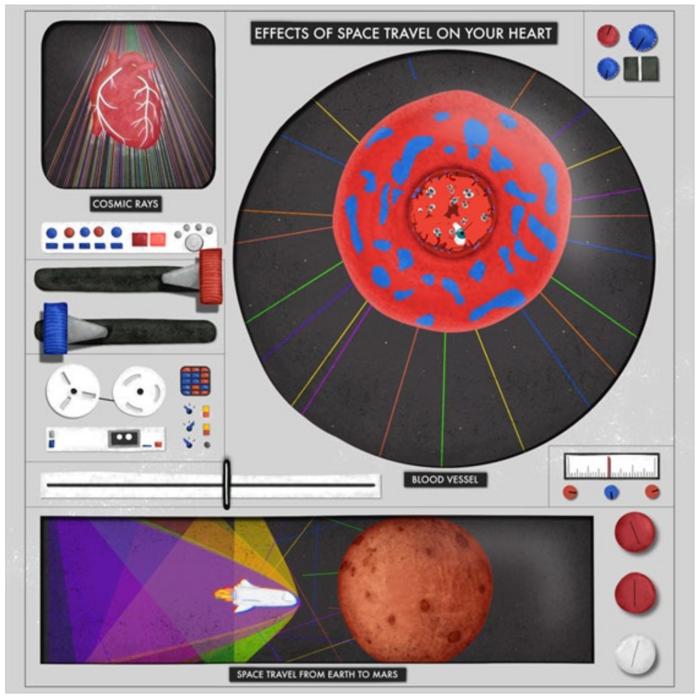
The Unshielded Hazards of Deep Space Exploration
As space agencies outline plans to send human crews to Mars and beyond, astronauts will inevitably face environmental hazards from which Earth naturally shields its inhabitants: intense cosmic radiation and microgravity. While orbital missions aboard the International Space Station remain partially protected by Earth's magnetosphere, interplanetary travelers will be directly exposed to deep space conditions.
Although scientists have long recognized that weightlessness and radiation alter human biology, the full magnitude and longevity of these physiological consequences have remained uncertain. A research study led by investigators from the Medical College of Wisconsin, published in the peer-reviewed journal PLoS One, investigates these critical questions regarding crew health during extended deep space transit.
Cardiovascular Vulnerability Under Compounded Stressors
The researchers evaluated the combined systemic impact of extended weightlessness and ionizing radiation exposure on the cardiovascular system. Their findings provide sobering answers regarding the long-term biological consequences of sustained deep space transit, indicating less than ideal prospects for baseline cardiovascular resilience.
The paper suggests that prolonged interplanetary exposure causes cellular and structural vascular stress that may not rapidly reverse upon return to gravity. The combined strain of cosmic radiation damaging cellular structures and microgravity inducing cardiovascular remodeling could leave astronauts vulnerable to long-lasting cardiac impairments well after the mission concludes.
Implications for Crewed Mars Mission Architecture
These findings carry direct implications for the engineering and medical frameworks required for crewed missions to Mars. Simply relying on existing orbital countermeasures, such as physical exercise regimes and modest structural shielding, may prove insufficient to mitigate cardiovascular degradation during multi-year planetary missions.
The study highlights an urgent need for targeted biomedical countermeasures and advanced radiation mitigation technologies prior to launching deep space expeditions. Moving forward, research groups aim to investigate targeted therapeutic interventions designed to protect cardiovascular tissues against the unavoidable physical stresses of interplanetary flight.

Comments
Loading comments...