Challenging Long-Held Planetary Assumptions
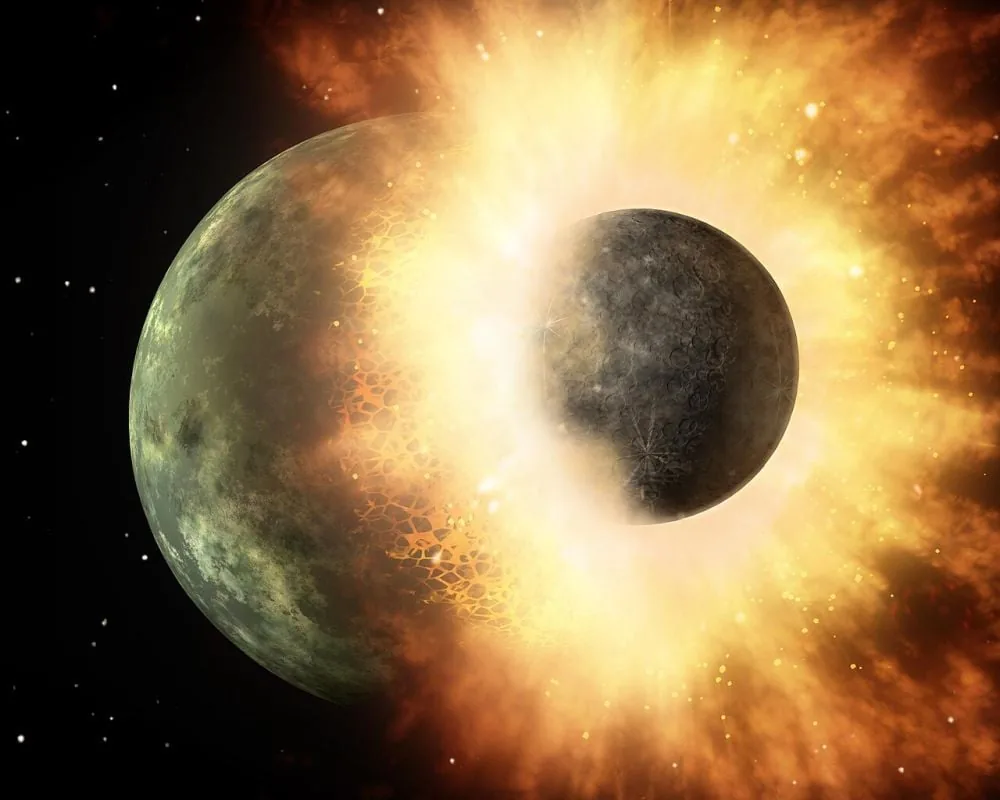
For a long time, planetary scientists assumed that giant impacts experienced by young rocky planets stripped their atmospheres away into space. According to traditional models, the immense heat and energy generated during these impacts blasted atmospheric gases out into the void. However, recent studies demonstrate that the opposite could actually be true.
Gravitational Hold and Atmospheric Retention
According to the new research, the substantial mass a young planet gains through a giant impact significantly increases its gravitational pull. This enhanced gravitational hold allows the planet to retain its atmosphere despite the intense heat generated by the collision. As a result, the planet can preserve its atmospheric layer rather than losing it to space.
Impact on Planetary Evolution Models
This finding requires a fundamental reassessment of how rocky planets and exoplanets evolve over time. The mechanisms governing atmospheric retention in the early Solar System and extra-solar systems will now be re-evaluated under this new framework. These results open up fresh perspectives on understanding the formation conditions of habitable worlds.
Comments
Loading comments...