Revisiting the Origin of Earth's Water
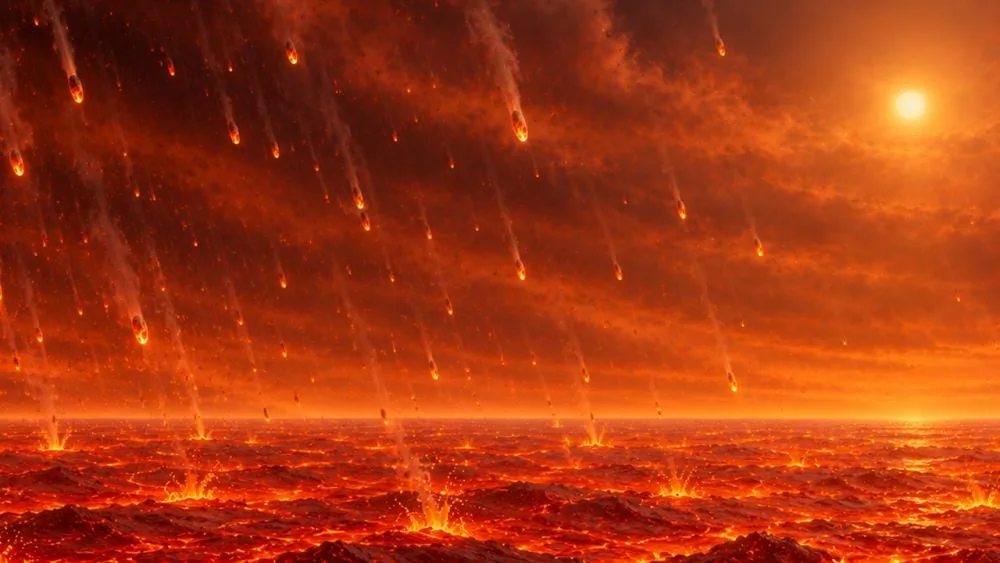
Traditional theories in planetary science have long assumed that water was delivered to Earth from outer space after the planet had fully formed and cooled. According to this traditional view, the vast bodies of water that currently cover our oceans were transported by a heavy bombardment of comets and asteroids. However, a new scientific study challenges this long-held assumption by suggesting that water delivery did not rely on external impacts. The research team demonstrates that water creation could instead have been an inherent part of Earth's own formation process from the very beginning.
Mechanisms and Dynamics of Water Creation
The new research re-examines the physical and chemical conditions present during the early growth phases of the young planet. According to the detailed analysis, the processes occurring during the assembly of a rocky planet provide the exact conditions necessary for water molecules to form directly within the planet's structure. This indicates that water was not merely added after cooling took place, but was chemically synthesized through intrinsic mechanisms during planetary growth. The analytical models demonstrate that interior chemical interactions are far more capable of producing water than previously believed.
Broader Implications for Rocky Planets Across the Universe
This breakthrough not only sheds light on Earth's ancient past, but also fundamentally alters how astrophysicists view terrestrial exoplanets across the universe. The findings reveal that water creation may be a standard feature in the formation of every rocky planet throughout the cosmos. Scientists emphasize that this new paradigm will guide future planetary formation models and offer a fresh perspective when evaluating the habitability and atmospheric potential of distant rocky worlds in upcoming observational campaigns.

Comments
Loading comments...